
03/26/2026
Maritime Workers Killed on Barge Waynehoe Near Ketchikan, Alaska

You Only Pay When We Win
.svg)
Key Facts at a Glance
Incident Date: Sunday, March 15, 2026
Location: Skowl Arm, McKenzie Inlet, approximately 25 miles northwest of Ketchikan, Alaska, on Prince of Wales Island
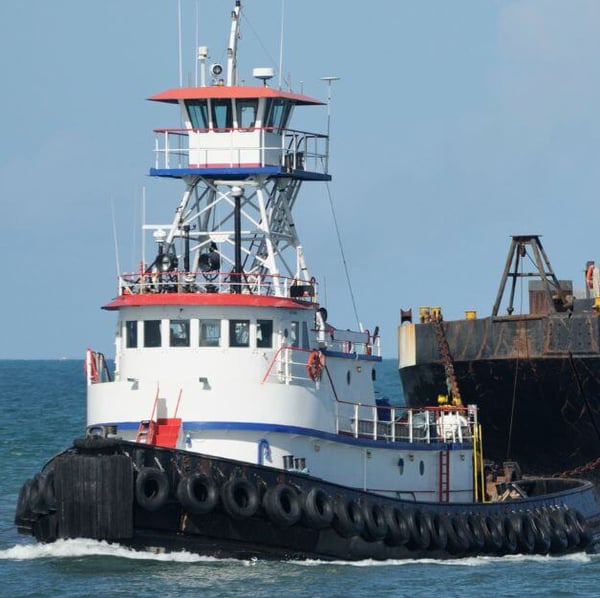
Vessel: Freight barge Waynehoe (130 feet), operated with tug vessel Chukchi Sea (92 feet)
Owner/Operator: Hamilton Marine Construction, 201 Harris Avenue, Bellingham, Washington 98225
Deceased: Ben Fowler, 21, of Sitka, Alaska; Sidney Mohorovich, 28, of Deming, Washington
Survivors: Two crewmembers recovered alive, reported in good condition
Reported Hazard: High levels of methane gas in the confined space, per family statements to the Associated Press
Investigation: United States Coast Guard investigation active; bodies sent to Anchorage for autopsies; cause of death not officially released
On the morning of Sunday, March 15, 2026, four crewmembers from the tug vessel Chukchi Sea entered a confined space aboard the 130-foot freight barge Waynehoe, which was moored in McKenzie Inlet within Skowl Arm, on the eastern side of Prince of Wales Island, approximately 25 miles northwest of Ketchikan, Alaska. Within minutes, contact was lost with all four men.
At 9:14 a.m. Alaska time, watchstanders at the United States Coast Guard Sector Southeast Alaska command center in Juneau received a mayday call from the remaining crew aboard the Chukchi Sea, reporting that they had lost contact with the four crewmembers inside the confined space aboard the barge. The Coast Guard directed the launch of a 45-foot Response Boat-Medium crew from Coast Guard Station Ketchikan, carrying members of the South Tongass Volunteer Fire Department, including a paramedic and two emergency medical technicians.
Before the Coast Guard response team arrived at the scene, the remaining crew of the Chukchi Sea had already managed to recover one deceased crewmember from the confined space and had assisted two survivors in getting out. Those two survivors were responsive but in need of medical attention. A fourth crewmember remained inside the confined space aboard the barge, unrecoverable at the time due to the dangerous atmospheric conditions within the space.
The barge was subsequently towed to a pier in Ketchikan. The Ketchikan Daily News reported that a Boyer Towing vessel performed the tow. North Tongass Volunteer Fire Department Chief Jerry Kiffer confirmed that the barge docked in Ward Cove, where the Coast Guard worked with the fire department and the barge owner to safely access the confined space. On Tuesday, March 17, in a coordinated multi-agency effort, the body of the second deceased crewmember was recovered from the confined space after the area was safely cleared.
The United States Coast Guard identified the two deceased as Ben Fowler, 21, of Sitka, Alaska, and Sidney Mohorovich, 28, of Deming, Washington. The two surviving crewmembers were initially reported in stable condition and later upgraded to good condition. Their names have not been publicly released. The bodies of Fowler and Mohorovich were sent to Anchorage for autopsies. The official causes of death have not been released as of the date of this article.
Ben Fowler was 21 years old and from Sitka, Alaska. His sister, Juel Fowler, told Alaska’s News Source that Ben was the classic small-town Alaska boy. He started commercial fishing at the age of 12. He loved everything about the outdoors. His sister described him as someone with an irrepressibly joyful spirit and boundless energy, who loved making people laugh and who could do anything and everything. He grew up running around on the fishing docks in his Xtratufs, playing in the dirt, constantly fishing. He was 21 years old.
Sidney Mohorovich was 28 years old and from Deming, Washington. He was one month into his new job with Hamilton Marine Construction. It was his first job in Alaska. He was a large equipment mechanic who had previously worked as a logger, a welder, and in residential construction and electrical work. His mother, Eva Mohorovich, told the Associated Press that he could pretty much figure anything out. His father, Todd Mohorovich, said that the net his son’s life cast out was far-reaching, that it reached different continents. Sidney lived in Deming with his fiancée, Emily Brendle, and they were planning their wedding for June 2026. Emily Brendle told Alaska’s News Source through tears that Sidney had her whole heart, and that she knew him for too short a time.
The last conversation Todd and Eva Mohorovich had with their son was on Saturday night, the evening before he died. Sidney told his parents about impending bad weather and said that the barge was in a spot where they would be sheltered from the storm. The crew planned to perform normal deck duties to secure everything ahead of the weather.
These were not reckless men. These were working men doing their jobs, relying on their employer to provide a safe workplace. They deserved competent supervision, functioning safety equipment, proper atmospheric testing, and adequate training. The question this investigation must answer is whether they received any of those things.
Todd Mohorovich told the Associated Press that Coast Guard officials informed the family that there were high levels of methane gas present in the confined space where his son and the other three crewmembers were found. The Coast Guard has not officially confirmed the presence of methane gas, and the official cause of death has not been released pending autopsy results.
Methane is an odorless, colorless gas that is lighter than air and accumulates in the upper portions of enclosed spaces. At concentrations between 5 and 15 percent by volume, methane is explosive. At higher concentrations, methane displaces oxygen. When methane displaces sufficient oxygen to bring the atmospheric oxygen content below 19.5 percent, the space becomes oxygen-deficient and is classified as immediately dangerous to life and health under federal regulations. At oxygen levels below 16 percent, a person begins experiencing impaired coordination and judgment. Below 12 percent, unconsciousness can occur within seconds and without warning. Below 6 percent, death occurs within minutes.
The critical characteristic of methane is that it provides no sensory warning. A worker entering a space with elevated methane and depleted oxygen will not smell anything unusual. They will not feel any irritation. They will simply collapse, often without understanding what is happening. This is why atmospheric testing before entry is not optional. It is the only thing standing between a worker and an invisible, odorless, lethal hazard.
Methane can accumulate in confined spaces aboard barges and vessels through several mechanisms. Decomposition of organic material trapped in cargo holds or tanks produces methane as a byproduct. Sediment, marine growth, and residual organic cargo can generate methane over time in sealed or poorly ventilated compartments. On freight barges that have carried organic materials such as wood products, soil, or construction debris, methane generation in enclosed void spaces is a recognized and well-documented hazard.
The family’s statement to the Associated Press raises the most fundamental question in this case: if methane gas was present in that confined space at high levels, was the atmosphere tested before entry? And if it was not tested, why not?
Todd Mohorovich told the Associated Press that the family does not know whether the four crewmembers entered the confined space together as a group or whether they entered in stages, with some entering to rescue others who had already collapsed. His exact words were telling: “We don’t know why the series of events that led to all the people being in the confined space, if they all like went down as a team or in separate stages.”
This question goes to the heart of one of the most devastating and well-documented patterns in confined space fatalities: the rescue cascade. Safety professionals and federal regulators have understood this pattern for decades. A worker enters a confined space and is overcome by a dangerous atmosphere. A coworker sees the first person collapse and instinctively rushes in to help, without any respiratory protection or atmospheric monitoring equipment. The second person is overcome by the same hazard. A third follows. Then a fourth.
The data confirms how common this pattern is. The international ship management trade association InterManager has documented 310 confined space deaths aboard vessels between 1996 and 2024 in 197 separate incidents. That is an average of 1.57 deaths per incident, driven almost entirely by the rescue cascade phenomenon. In some incidents, every single person who entered the space died, including multiple would-be rescuers.
Federal regulations specifically address this hazard. Under Title 29 of the Code of Federal Regulations, Section 1915.12, employers in maritime operations are required to designate a standby person at the entrance to any confined space during entry. That standby person must maintain communication with the entrants and must not enter the space under any circumstances unless properly equipped with self-contained breathing apparatus. The standby person exists precisely to prevent the rescue cascade, to stop the second and third and fourth person from following the first person into a deadly atmosphere.
The question in this case is whether Hamilton Marine Construction had a standby person posted at the entrance to the confined space aboard the Waynehoe, and whether that standby person was trained and equipped to prevent exactly the kind of cascade that appears to have occurred.
Hamilton Marine Construction, as the owner and operator of the tug Chukchi Sea and the freight barge Waynehoe, was subject to multiple overlapping bodies of federal regulation governing confined space entry aboard vessels. These regulations are not suggestions. They are mandatory requirements backed by the force of federal law.
The Occupational Safety and Health Administration maintains specific regulations for confined and enclosed spaces and other dangerous atmospheres in shipyard employment under Title 29 of the Code of Federal Regulations, Part 1915, Subpart B. These regulations apply to all work in confined and enclosed spaces in shipyard employment, including vessels, vessel sections, and land-side operations regardless of geographic location.
Under Section 1915.12, before any worker enters a confined or enclosed space or other dangerous atmosphere, the employer must ensure that a competent person tests the atmosphere. The testing must follow a specific sequence: first oxygen content, then flammable gases and vapors, then toxic gases and vapors. This sequence is mandatory because the type of instrument used to measure flammable gases can give inaccurate readings in oxygen-deficient atmospheres. Testing must occur at multiple levels within the space to account for gas stratification.
Section 1915.11(b) defines a confined space as a compartment of small size and limited access such as a double bottom tank, cofferdam, or other space which by its small size and confined nature can readily create or aggravate a hazardous exposure. An oxygen-deficient atmosphere is defined as one containing less than 19.5 percent oxygen by volume.
Section 1915.7 requires that the employer designate a competent person who is capable of recognizing and evaluating employee exposure to hazardous substances or other unsafe conditions and who is capable of specifying the necessary protection and precautions to ensure safety. The competent person must have demonstrated knowledge of the specific hazards of the spaces being entered.
The United States Coast Guard exercises concurrent jurisdiction over vessel safety and has its own set of regulations governing confined space entry, particularly on inspected vessels and vessels that have carried hazardous cargoes. The Coast Guard also investigates all serious marine casualties, including deaths aboard vessels. Coast Guard investigation reports are discoverable in civil litigation and frequently contain findings regarding regulatory violations, failures of safety management systems, and deficiencies in crew training and supervision.
Captain Stanley Fields, Commander of Coast Guard Sector Southeast Alaska, issued a public statement acknowledging that confined spaces on vessels can contain extremely dangerous, invisible hazards and committed the Coast Guard to a thorough investigation. That investigation is currently active.
Even where a specific regulatory standard does not precisely address the particular confined space configuration or operational context, Section 5(a)(1) of the Occupational Safety and Health Act, known as the General Duty Clause, requires every employer to furnish each employee a workplace free from recognized hazards that are causing or are likely to cause death or serious physical harm. Methane gas accumulation in enclosed spaces aboard barges is a recognized hazard in the maritime construction industry. The General Duty Clause imposes an independent obligation on the employer to address that hazard even in the absence of a specific standard.
Federal law required a specific sequence of safety measures before any crewmember entered the confined space aboard the barge Waynehoe. Each of these measures exists because workers have been killed when it was omitted.
When a confined space death occurs, the investigation almost invariably reveals that one or more of these mandatory steps was not followed. The employer did not test the atmosphere. The employer did not ventilate the space. The employer did not post an attendant. The employer did not have rescue equipment available. The employer did not train the crew. The question for the Coast Guard investigators in this case is: which of these steps was followed aboard the Waynehoe on March 15, and which was not?
Maritime wrongful death cases involve a distinct body of federal law that is fundamentally different from state-law wrongful death claims. The families of maritime workers killed in the course of employment have specific legal rights that must be understood and pursued within the framework of federal admiralty and maritime jurisdiction.
The Jones Act provides a negligence cause of action for seamen killed in the course of their employment. If Fowler and Mohorovich qualify as seamen under the Jones Act, which requires a substantial connection to a vessel in navigation, their personal representatives may pursue claims against the employer for wrongful death caused by the employer’s negligence. The Jones Act applies a relaxed causation standard. The family needs to prove only that the employer’s negligence played some part, even a slight part, in causing the death. Where the employer sent workers into a methane-filled confined space without atmospheric testing, ventilation, rescue equipment, or proper training, the negligence is not a close question.
Jones Act wrongful death damages include loss of future earnings, loss of fringe benefits, loss of nurture and guidance (for minor children and dependent parents), funeral expenses, and the conscious pain and suffering experienced by the decedent between the time of exposure and death. In cases involving methane inhalation and oxygen deprivation, the period of conscious suffering, while potentially brief, can be agonizing.
Independent of the Jones Act, maritime workers who qualify as seamen have a strict liability claim for unseaworthiness under general maritime law. A vessel is unseaworthy if it is not reasonably fit for its intended purpose, and that fitness includes the safety systems, equipment, and crew competence necessary to protect workers. A barge with a confined space containing lethal levels of methane gas, where no atmospheric testing equipment is available, where no ventilation system is deployed, and where the crew has not been trained in confined space entry procedures, is an unseaworthy vessel. The family does not need to prove negligence for an unseaworthiness claim. The family needs only to prove that the unseaworthy condition was a proximate cause of the death.
If the deaths occurred on navigable waters beyond three nautical miles from the shore of the United States, the Death on the High Seas Act provides an additional wrongful death cause of action. Skowl Arm is within the interior waters of Alaska, which may place this incident within territorial waters rather than the high seas. The applicability of this statute to this particular incident will depend on the precise legal classification of the waters where the barge was moored.
For the two surviving crewmembers who were injured in the confined space, the vessel owner is obligated under general maritime law to pay maintenance, which covers daily living expenses, and cure, which covers all reasonable and necessary medical expenses, from the date of injury until maximum medical improvement. This obligation applies regardless of fault. If the employer willfully or arbitrarily refuses to pay maintenance and cure, the injured worker may be entitled to compensatory damages, punitive damages, and attorney fees under the holding of Atlantic Sounding Company v. Townsend, 557 United States Reports 404 (2009).
The United States Coast Guard is conducting the primary investigation into this incident. The Coast Guard investigation will produce a Report of Investigation that documents the factual findings, identifies the probable cause of the incident, and may recommend corrective actions. This report is typically completed within several months of the incident, though complex investigations can take longer.
The Occupational Safety and Health Administration may also conduct a separate investigation, particularly if the operations aboard the Waynehoe fall within OSHA’s maritime jurisdiction under 29 Code of Federal Regulations Part 1915. OSHA investigations can result in citations and monetary penalties against the employer for regulatory violations.
The National Transportation Safety Board may also become involved if it determines that the incident falls within its investigative jurisdiction over major marine casualties.
For the families, the most critical evidence in this case includes the following: the atmospheric testing records, if any, for the confined space aboard the Waynehoe on March 15, 2026; the calibration records for any gas detection instruments aboard the tug or barge; the written confined space entry procedures maintained by Hamilton Marine Construction; the training records for all four crewmembers, documenting what confined space entry training they received and when; the safety management system documents for Hamilton Marine Construction, including any job safety analyses, toolbox talk records, and risk assessments applicable to confined space entry; the vessel inspection records for the Waynehoe, including any prior identification of confined space hazards; the operating history of the Waynehoe, including what cargoes or materials had been transported or stored in the space where the incident occurred; and any prior incidents, near-misses, or safety complaints involving confined space operations at Hamilton Marine Construction.
This evidence must be preserved immediately. Vessel operators who are facing potential wrongful death liability have been known to alter, destroy, or lose critical safety records after a fatal incident. The families should be aware that an experienced maritime attorney can file a preservation demand requiring the company to preserve all relevant documents, electronically stored information, and physical evidence, including the vessel itself.
VB Attorneys is a Houston-based trial law firm that represents maritime workers and their families in serious injury and wrongful death cases arising under the Jones Act, general maritime law, and the Longshore and Harbor Workers’ Compensation Act. The firm is led by Brian Beckcom, who is Board Certified in Personal Injury Trial Law by the Texas Board of Legal Specialization, a distinction held by fewer than three percent of licensed attorneys in Texas.
Brian Beckcom studied admiralty law under Professor David Robertson at the University of Texas School of Law and served as Chief Notes Editor of the Texas Law Review. His Law Review article was cited by the United States Government in a brief filed before the Supreme Court of the United States. He has been named a Texas Super Lawyer every eligible year for 14 consecutive years.
Brian Beckcom has cross-examined more than 400 insurance medical examination doctors over the course of his career. He holds a computer science background in addition to his legal credentials, which gives the firm a significant analytical edge in cases involving complex technical evidence, safety system failures, and regulatory compliance issues.
VB Attorneys handles maritime wrongful death cases on a contingency fee basis. The family pays nothing unless the firm recovers compensation on their behalf.
Free Consultation. Call VB Attorneys at (713) 224-7800 or visit vbattorneys.com. We represent families of maritime workers killed in confined space incidents, Jones Act cases, and offshore wrongful death claims. Contingency fee basis. You pay nothing unless we recover for you.
United States Coast Guard, Sector Southeast Alaska, Press Release: Coast Guard Investigating Fatal Confined Space Incident Near Ketchikan, Alaska, March 20, 2026.
Associated Press, via Anchorage Daily News, CBS News, USA Today, Boston Globe, and Military.com: 2 Tugboat Crew Members Killed in Confined Space Incident on Barge, Coast Guard Says, March 18-19, 2026.
Alaska’s News Source (KTUU): Two Killed in Confined Space Aboard Tug Boat Near Ketchikan, Coast Guard Reports, March 18, 2026.
Ketchikan Daily News: Fatal Incident Reported on Barge in Skowl Arm; Parents: Methane Gas Involved in Fatal Barge Confined Space Incident, March 2026.
KRBD / KTOO / Alaska Public Media: Crewmembers in Fatal Barge Incident Identified, March 18-20, 2026.
gCaptain: Two Dead in Confined Space Accident Aboard Barge Near Alaska, March 2026.
Marine Insight: Two Dead, Two Injured in Confined Space Incident Aboard Barge Near Ketchikan, Alaska, March 2026.
Chilkat Valley News: Second Body Recovered From Barge Accident Near Ketchikan, March 21, 2026.
InterManager: Confined Space Fatality Statistics 1996-2024, reported to the International Maritime Organization.
29 Code of Federal Regulations Part 1915, Subpart B: Confined and Enclosed Spaces and Other Dangerous Atmospheres in Shipyard Employment.
OSHA Directive CPL 02-01-061: 29 CFR Part 1915, Subpart B, Confined and Enclosed Spaces, May 22, 2019.