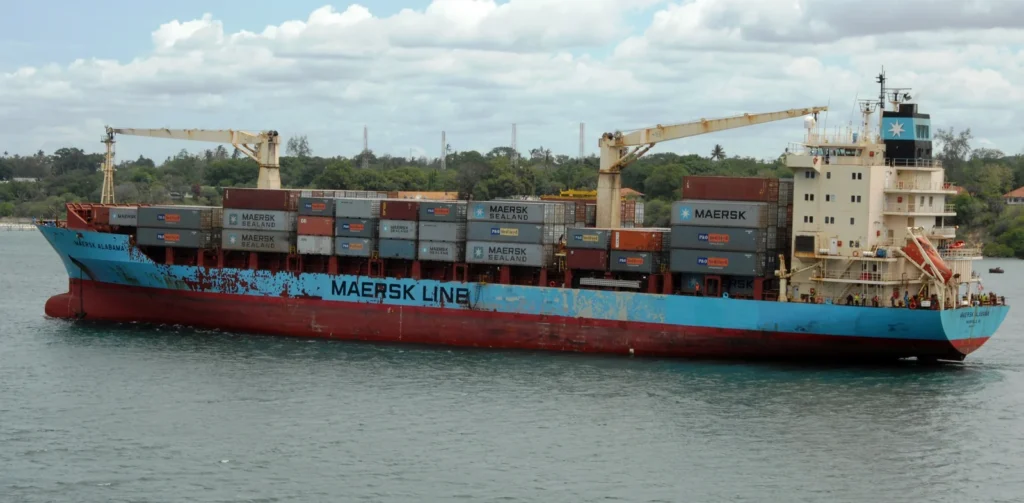

After an injury aboard a vessel, the worker and company may disagree about the job, the equipment, or the precautions that were available. Proving what happened requires more than choosing between accounts: it requires identifying the duty, preserving the evidence, and connecting a specific failure to the harm.
Brian Beckcom has examined those questions in cases involving medical care at sea, working conditions aboard commercial vessels, and the security decisions preceding piracy attacks. His work includes a $10 million captain’s case and representation of nine Maersk Alabama crew members. The useful lesson is not that every vessel case looks alike. It is that evidence must answer the legal question in the particular case.
Start with the right claim—and the right company
“Vessel negligence” can describe several different situations. The employer, vessel owner, operator, charterer, and equipment contractor may be separate entities. Their names on a contract do not automatically make them liable, and a vessel’s name does not identify every company responsible for its operation.
- Jones Act negligence: 46 U.S.C. § 30104 permits an eligible seaman injured in employment to bring a claim against the employer. The investigation examines the employer’s conduct and how it contributed to the injury.
- Unseaworthiness: this is a separate general maritime claim concerning the vessel’s reasonable fitness for its intended use. In Mitchell v. Trawler Racer, the Supreme Court explained that the duty does not depend on the owner’s knowledge of a temporary unseaworthy condition. That does not make the owner an insurer against every accident; the condition and causal connection still matter.
- Maintenance and cure: this concerns an eligible seaman’s living expenses and medical care for illness or injury in the vessel’s service. It ordinarily does not require proof of employer negligence. Vella v. Ford Motor Co. addresses the obligation’s duration and medical determination of permanence.
Seaman status is itself a factual and legal issue. Chandris v. Latsis looks to work contributing to a vessel’s function or mission and a connection to a vessel, or identifiable fleet, substantial in duration and nature. Being injured near water is not enough. Passengers, longshore workers, and other maritime workers can have different remedies.
Build an evidence map, not just a document pile
| Question | Potential evidence | What needs testing |
|---|---|---|
| What work was assigned? | Job instructions, work permits, crew assignments, toolbox talks, messages, witness accounts. | Who gave the instruction, when it changed, and whether the written procedure matched actual practice. |
| What condition caused harm? | Original photographs, inspections, equipment, maintenance history, drawings and repair records. | Whether the condition existed at the relevant time and whether later changes affect the comparison. |
| Was the danger foreseeable? | Earlier complaints, defect reports, near-miss records, warnings and relevant training. | Who received the information and how it relates to the specific danger—not merely whether a document exists. |
| How did the injury happen? | Witness observations, available recordings, vessel movements, physical measurements and qualified expert analysis. | Clock differences, camera limits, missing intervals and alternative explanations. |
| What harm followed? | Medical records, evacuation communications, treatment chronology, work history and care assessments. | Causation, aggravation of prior conditions, future needs and the basis for each medical opinion. |
These are potential sources, not a promise that every vessel creates or retains them. Discovery also has limits: relevance, proportionality, privilege, confidentiality, and court orders affect what can be obtained and used.
Electronic records can help—but not every vessel has a “black box”
A voyage data recorder can preserve navigation and other shipboard information, but IMO carriage requirements depend on vessel type, size, voyage, and applicable rules. A lawyer should identify the installed equipment and its actual recording capabilities before promising bridge audio or a complete electronic reconstruction.
Likewise, Coast Guard AIS requirements apply to defined categories of vessels. AIS can help examine transmitted movement information; it does not prove everything happening aboard. A commercial website’s plotted track may be incomplete, delayed, or different from the original records. GPS, radar, CCTV, engine controls, dispatch communications, and personal devices require their own preservation and interpretation.
Preserve originals when lawfully available. Screenshots may omit metadata, surrounding messages, or an important gap. Identify the device, custodian, relevant time period, and overwrite risk. Do not enter company systems without permission or alter equipment to obtain information.
What VB Attorneys’ maritime cases show
Medical response and a $10 million captain’s case
In the captain’s botulism case, Brian examined food-safety practices, health records, company paperwork, and communications concerning the response to the captain’s illness. The case resolved for $10 million. Its evidence extended beyond the meal itself to the systems and medical response surrounding it. Medical causation and company conduct required different kinds of proof.
Warnings and decisions before the Maersk Alabama attack
Brian represented nine Maersk Alabama crew members. Their claims concerned warnings, routing, training, and security precautions; the companies disputed responsibility. The cases ended in confidential settlements. The investigation shows why a maritime case may depend on decisions made well before the event that caused the injury.
Company roles in Captain Wren Thomas’s case
In Captain Wren Thomas’s C-Retriever case, Brian pursued claims involving a kidnapping off Nigeria and warnings preceding the voyage. The litigation examined the companies’ different roles; the Fifth Circuit allowed amended maritime negligence claims to proceed, without deciding liability. The case later resolved confidentially. Identifying the correct duty and defendant mattered alongside reconstructing the attack.
A Coast Guard report is not a substitute for courtroom proof
An official investigation can identify important issues. But 46 U.S.C. § 6308 bars marine casualty investigation reports, including their findings and conclusions, from evidence or discovery in ordinary civil proceedings. It also restricts testimony and discovery from Coast Guard investigators without permission.
That distinction is easy to overlook. A public report is not automatically admissible just because the government released it. Counsel must evaluate the governing restrictions and develop independently available testimony, records, and physical evidence rather than assume the report proves liability.
What to preserve after an injury aboard a vessel
- Seek necessary medical attention and report the injury accurately.
- Keep photographs, messages, medical paperwork, and employment records already lawfully in your possession.
- Write down the vessel, companies involved, task, location, witnesses, and sequence while your memory is fresh. Separate what you saw from what someone told you.
- Do not delete relevant material, edit original recordings, or make unsafe efforts to retrieve equipment.
- Ask counsel promptly about targeted preservation. A letter does not itself recover lost data or guarantee a court sanction.
In federal litigation, Rule 37(e) distinguishes lost electronic information, prejudice, and intent to deprive when addressing remedies. Missing evidence is serious, but it does not automatically win the case.
Explore the related legal frameworks in our maritime injury practice and Jones Act guide.
Tell Us What Happened
Talk with Brian about the vessel, your work, the injury, and what the company has told you. Start with the facts you have—not an assumption that you must already prove the entire case. Request a consultation or call 877-724-7800.
Every case is different. Prior results do not guarantee a similar outcome.