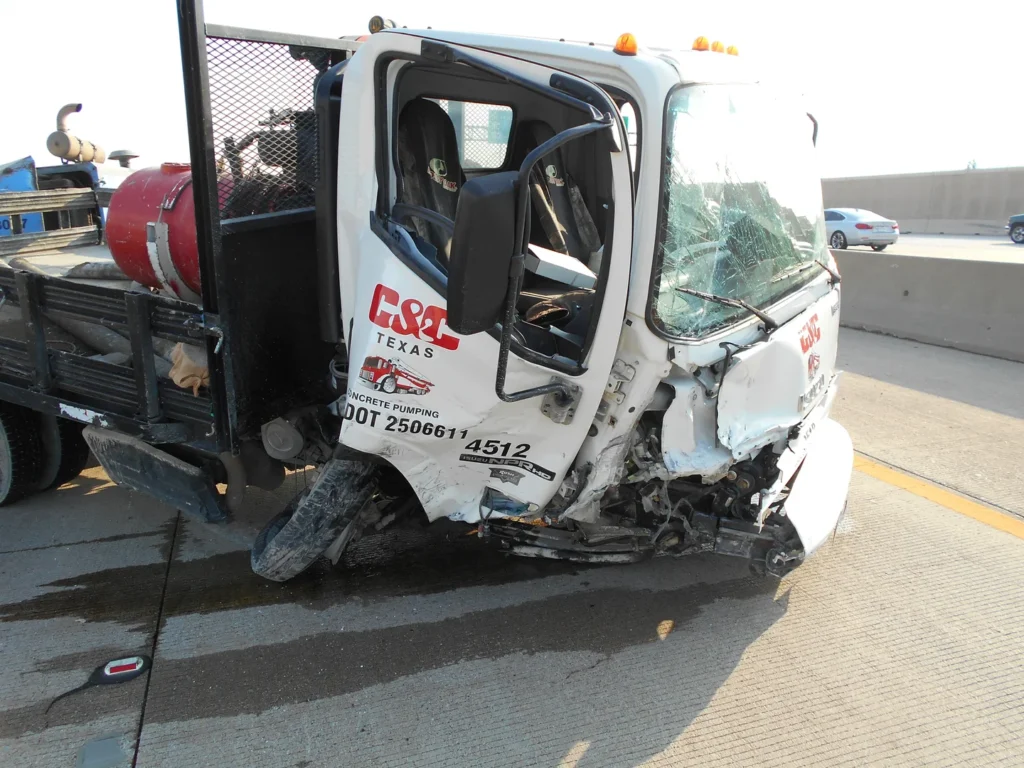
When a trucking company puts an unsafe driver or an unsafe truck on the road, the consequences can be catastrophic. A family can lose a parent. A worker can lose the ability to earn a living. And too often, the companies that made the decisions before the crash insist that responsibility begins and ends with the person behind the wheel.
Texas should reject that excuse.
Freight brokers help decide which trucking companies haul America’s loads. They profit from arranging transportation. When a broker knows, or should know, that a carrier has a particular safety problem that makes it unfit for the job, and that problem foreseeably causes a crash, the broker should answer for its own negligence.
That is not a radical idea. It is basic accountability.
Michigan is considering a clear rule. Texas should do the same.
Michigan lawmakers are considering House Bill 6286, a proposal addressing negligent hiring, retention, supervision and training involving commercial motor vehicles. The bill focuses on a particular unfitness the responsible company knew or should have known about, along with foreseeability and causation. It has not become law.
Texas legislators should introduce and pass a Texas version that makes clear that a freight broker cannot ignore known or reasonably discoverable safety problems, put an unfit carrier on the road, and escape responsibility when that choice causes harm. Texas should draft its own law for Texas families rather than mechanically copy Michigan’s state-specific provisions.
The standard should require proof. A bad outcome alone should not establish liability. But neither should a corporate label erase it. If the evidence shows that a company made a negligent selection and that decision caused a foreseeable injury, a jury should be able to hear the case.
The Supreme Court has already cleared an important obstacle
In May, a unanimous U.S. Supreme Court held in Montgomery v. Caribe Transport II that federal law’s motor-vehicle safety exception preserves the negligent-hiring claim at issue against a freight broker. The Court did not find the broker liable. It allowed the claim to proceed.
That distinction matters. The question is not whether every broker is responsible for every wreck. The question is whether a broker’s own unsafe decision can be examined when the evidence supports it. The answer should be yes.
A Texas statute would make that principle unmistakable and give families, carriers and brokers a clear rule: safety decisions carry responsibility.
The decisions that cause harm often happen before the truck moves
In the trucking cases my partner Vuk Vujasinovic and I have handled, the important evidence often concerns decisions made long before the collision: who approved the load, what warnings the company received, whether safety rules were followed and what the records actually show.
In one oilfield trucking case, our investigation examined warnings about an overloaded rig, driver fitness and altered records. The case resolved in a settlement. It illustrates why an investigation cannot stop with the driver. It must examine the company decisions and records behind the trip.
In the Anheuser-Busch case, a court ruled that Anheuser-Busch was the motor carrier and statutory employer for the shipment at issue, responsible for the driver’s negligence, if any. That ruling did not decide negligence or damages, and Anheuser-Busch and the other defendants deny liability. The point is that the roles companies assign themselves on paper do not end the inquiry into who undertook the transportation and what the law requires.
Those are different cases and different legal questions. Both show why working Texans deserve the opportunity to investigate the full chain of decisions rather than accept the first corporate explanation.
Texas lawmakers should stand with working families
For years, powerful lawsuit-reform organizations have pressed Texas lawmakers to restrict accountability in the name of protecting business. Texans for Lawsuit Reform is now led by Ryan Patrick, the son of outgoing Lt. Gov. Dan Patrick, who lost his reelection bid. Its political action committee reported more than $29 million on hand in its February 2026 filing.
Those organizations have every right to advocate their position. But the legislature and governor should listen just as carefully to the Texans whose lives are changed when corporations cut corners, disregard safety warnings or shift responsibility after a preventable crash.
The trucking and transportation industry keeps our economy moving. Most people who work in it want safe roads and responsible operators. Holding a negligent broker or carrier accountable protects those companies too, because responsible businesses should not have to compete against firms that gain an advantage by ignoring safety.
Texas legislators and the governor should act. Pass a clear law that holds freight brokers and other transportation companies responsible for their own negligent decisions when those decisions foreseeably cause injury. Require proof. Preserve existing legal protections and remedies. And make sure ordinary working Texans have a meaningful opportunity to present their evidence to a jury.
The people who use Texas highways should matter at least as much as the interests that can afford to lobby the Capitol.