The court in the Rogers wrongful death case has ruled that Anheuser-Busch, LLC was the motor carrier for the shipment involved in the fatal Interstate 10 collision and the statutory employer of driver Leandre Sime. The September 22, 2026 order holds Anheuser-Busch vicariously liable for Sime’s negligence, “if any.”
The ruling resolves an important question about corporate responsibility. The driver’s negligence, causation and damages remain to be decided. The court also denied summary judgment motions by Anheuser-Busch and Archerhub, LLC, resolved several defenses, and moved the trial setting from October 5, 2026 to February 1, 2027.
VB Attorneys represents members of Brandon Rogers’s family. Brian Beckcom and Brendan Fradkin have worked on the motor-carrier and statutory-employer issues, with Matt Kita assisting on the briefing. The case is pending before Judge Justin Sanderson in the 60th Judicial District Court of Jefferson County, Texas, Cause No. 23DCCV0514.
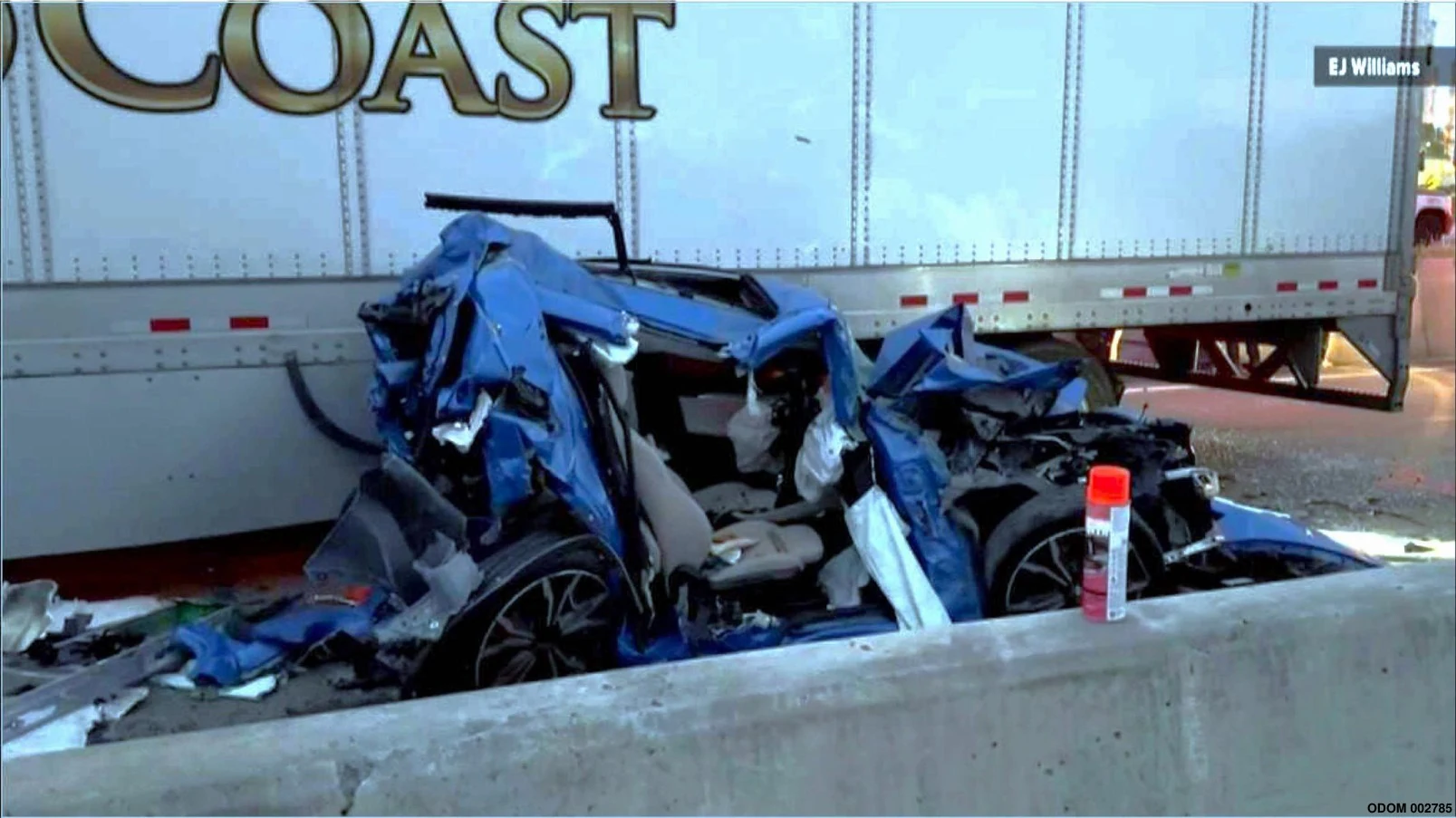
The crash and the question behind it
Brandon Rogers died in the April 15, 2023 collision on Interstate 10 in Jefferson County. The lawsuit alleges that Sime’s commercial tractor-trailer struck the rear of Lottie “Suzan” Odom’s vehicle in an active construction zone, causing a chain collision. Rogers was riding in Odom’s vehicle. Odom and other people sustained serious injuries.
The truck was carrying a shipment of energy beverages from Tempe, Arizona to Jacksonville, Florida. The driver and the trucking company were part of a larger transportation arrangement that also involved Anheuser-Busch and Archerhub.
The case required identifying the legal responsibilities behind that arrangement. Who accepted the obligation to transport the freight? Which company acted as the motor carrier? Could a company answer for the driver’s negligence even if another business supplied the truck and paid the driver? Those questions became central to the summary judgment proceedings.
What the court decided about Anheuser-Busch
On September 22, the court granted the plaintiffs’ motion for partial summary judgment and made three express findings: Anheuser-Busch was a motor carrier for the shipment; Anheuser-Busch was Sime’s statutory employer; and Anheuser-Busch is vicariously liable for Sime’s negligence, if any.
Vicarious liability means one party can be legally responsible for another party’s negligent conduct because of the relationship between them. Here, the court has established the relevant relationship between Anheuser-Busch and Sime for this shipment.
The words “if any” matter. The order does not independently determine that Sime was negligent or fix the amount of damages. It determines that Anheuser-Busch answers for his negligence if that negligence is established. That is a substantial step in a case where the companies’ transportation roles were disputed.
The ruling concerns this shipment and this record. It does not make every business whose goods travel on a truck the driver’s statutory employer.
What statutory employer means in trucking
In a commercial trucking case, statutory employment can extend beyond ordinary payroll arrangements. The federal trucking safety regulations define an employee to include a commercial vehicle driver who operates as an independent contractor. The regulatory framework addresses the responsibility of the motor carrier operating the transportation.
For an injured person or a family bringing a wrongful death claim, the inquiry therefore reaches beyond the name on the truck or the company that issued the driver’s paycheck. Shipping records, agreements and the role each company performed can affect which business is legally responsible.
In Rogers, the court has already decided Anheuser-Busch’s motor-carrier and statutory-employer status for the shipment. The remaining negligence and damages questions proceed with that determination in place.
The shipping documents mattered
The April 14, 2023 bill of lading identifies “Beyond Beer” in its carrier field. A bill of lading is the shipping document that records the load and the parties involved in its transport. Beyond Beer is identified in the plaintiffs’ filed petition as Anheuser-Busch’s internal business unit.
Other records used different labels. A signed February 2023 amendment to the Anheuser-Busch and Archerhub agreement called Anheuser-Busch the shipper and Archerhub the carrier. The distinction between those contractual descriptions and the role performed on the particular shipment was part of the case.
The carrier issue required examining the documents together and testing the company’s testimony against them. The court’s September order decides Anheuser-Busch’s status for the shipment despite the parties’ dispute over how to characterize its role.
This is why a serious truck accident case can require work far beyond the collision report. The crash evidence addresses how the impact occurred. The freight records help establish which companies had responsibility for the transportation that put the truck on the road.
The companies’ dismissal motions were denied
In a separate September 22 order, the court denied Anheuser-Busch’s combined traditional and no-evidence motion for summary judgment in its entirety. A summary judgment motion asks a judge to decide a claim or issue before trial. Anheuser-Busch sought judgment on the grounds set out in its motion; the court rejected those requests.
The court found that Anheuser-Busch had not established its entitlement to judgment as a matter of law on any asserted ground and that the plaintiffs had produced evidence raising genuine issues of material fact on the challenged elements. Claims identified in the order include negligent selection and retention, retained control, negligent entrustment and gross negligence, among others. The denial allows those issues to proceed; it does not itself prove each claim.
The order also sustained objections to several categories of Anheuser-Busch’s summary judgment evidence. These included conclusory statements describing the companies’ roles, the Derrick Schneble affidavit, testimony offered to establish the contents and legal effect of a transportation and broker agreement that had not been produced, and pleadings offered as evidence.
The court struck the challenged evidence and declined to consider it for that summary judgment decision. That ruling reinforces a practical requirement: a description such as “shipper” or “broker” must be supported by competent evidence when the legal responsibility of the company is disputed.
The court also denied Archerhub’s traditional motion for summary judgment. That is a separate ruling on Archerhub’s request for judgment. The Anheuser-Busch statutory-employer determination does not automatically establish the same status for Archerhub.
Several defenses were resolved before trial
A fourth September 22 order granted parts of the plaintiffs’ motion for partial summary judgment on defenses. Among the defenses eliminated were comparative and contributory negligence asserted against the plaintiffs, failure to mitigate damages, and specified medical-expense defenses based on not submitting bills to health insurance.
The court also rejected specified defenses asserted by Archerhub, including consent, waiver, release, estoppel, assumption of risk, force majeure and the Graves Amendment. It granted the requested relief on the identified Act of God and federal preemption defenses as set out in the order.
Those decisions narrow the issues the affected defendants may raise. The order prohibits relying on a defense that it disposed of to seek a jury question, instruction or finding.
The plaintiffs did not obtain every part of the relief requested. The court denied their summary judgment requests concerning preexisting medical conditions, unavoidable accident and sudden emergency. It also preserved the defendants’ ability to contest causation, the reasonableness or necessity of medical treatment, and amounts paid or incurred, as permitted by Texas law.
The court expressly described this defense order as a partial summary judgment. It did not dispose of all claims or parties or award damages. Other lawyers representing injured claimants participated in obtaining these rulings; the affirmative-defense motion was handled by counsel for Odom.
Trial is now set for February 1, 2027
On September 16, before the summary judgment orders were signed, the court granted Anheuser-Busch and Archerhub’s request for a continuance. The order moved the October 5, 2026 trial setting to February 1, 2027.
The Second Amended Agreed Scheduling Order, filed October 5, confirms jury selection and trial for February 1, 2027 at 9:00 a.m. It sets the pretrial conference for January 28 at 9:00 a.m. and December 28, 2026 deadlines for discovery, pleading amendments, dispositive motions and motions challenging expert testimony.
The continuance changed the schedule. The September summary judgment orders resolved substantive issues that will shape the case as it moves toward the new trial setting.
What the Rogers case shows about preparation
The motor-carrier ruling followed work on the shipment records, company testimony and the law governing transportation responsibility. VB Attorneys’ lawyers developed and reviewed the carrier and statutory-employer motion, with Matt Kita assisting on the briefing and other plaintiffs’ counsel participating in the case.
The result of that work is a court order establishing Anheuser-Busch’s role for the shipment. The next stage requires proving the remaining issues, including negligence, causation and damages, within the framework of the court’s rulings.
Brian Beckcom is Board Certified in Personal Injury Trial Law by the Texas Board of Legal Specialization. In this case, the firm’s preparation has addressed the driver’s conduct and the corporate transportation arrangement behind the load. Both are important to understanding responsibility for a fatal commercial truck collision.
Questions about the Rogers rulings
Did the court find Anheuser-Busch responsible as a motor carrier?
Yes. The September 22, 2026 partial summary judgment finds that Anheuser-Busch was a motor carrier for the shipment and Sime’s statutory employer. It makes Anheuser-Busch vicariously liable for his negligence, if any. Whether Sime was negligent and the resulting damages remain separate issues.
Can a statutory employer be different from the company that pays a truck driver?
Yes. The trucking regulatory framework can include independent-contractor drivers within its employment definitions. A company’s responsibility depends on the applicable law and its actual role in the transportation. In Rogers, the court has decided Anheuser-Busch’s status for the shipment.
Were all claims and defenses decided?
No. The court denied Anheuser-Busch’s and Archerhub’s summary judgment motions and eliminated specified defenses, but other issues remain. The orders do not award damages or resolve the entire case.
When is the Rogers trial scheduled?
The current scheduling order sets jury selection and trial for February 1, 2027 at 9:00 a.m. in the 60th Judicial District Court of Jefferson County, Texas. The prior setting was October 5, 2026.
Tell us what happened
VB Attorneys handles serious commercial trucking injury and wrongful death cases. The work includes investigating the collision, tracing the freight arrangement and examining the responsibilities of drivers, carriers and other transportation participants. The first conversation is free. Call (877) 724-7800 for a straight answer about the next steps.
Sources
Rogers litigation, Cause No. 23DCCV0514, 60th Judicial District Court, Jefferson County, Texas: the four signed September 22, 2026 summary judgment orders; the September 16 continuance order; and the Second Amended Agreed Scheduling Order signed October 2 and filed October 5, 2026.
April 14, 2023 bill of lading, ANHEUSER BUSCH-000001; signed February 27, 2023 agreement amendment, ANHEUSER BUSCH-000052–000053; plaintiffs’ Ninth Amended Petition filed August 19, 2026; and case crash photograph ODOM002785.
49 C.F.R. § 390.5T, current federal motor-carrier safety definitions.