When a freight broker may be responsible
Yes, a freight broker may be held responsible after a truck crash when the evidence and applicable state law support a claim that it negligently selected the carrier. A 2026 Supreme Court decision removed an important federal barrier to those claims. A family still has to prove why the broker is legally responsible for the harm.
That distinction matters when someone has been injured or killed. The driver and the company named on the truck may be only part of the transportation arrangement. Finding out who selected the carrier, who controlled the work and who accepted responsibility for the shipment can change the case.
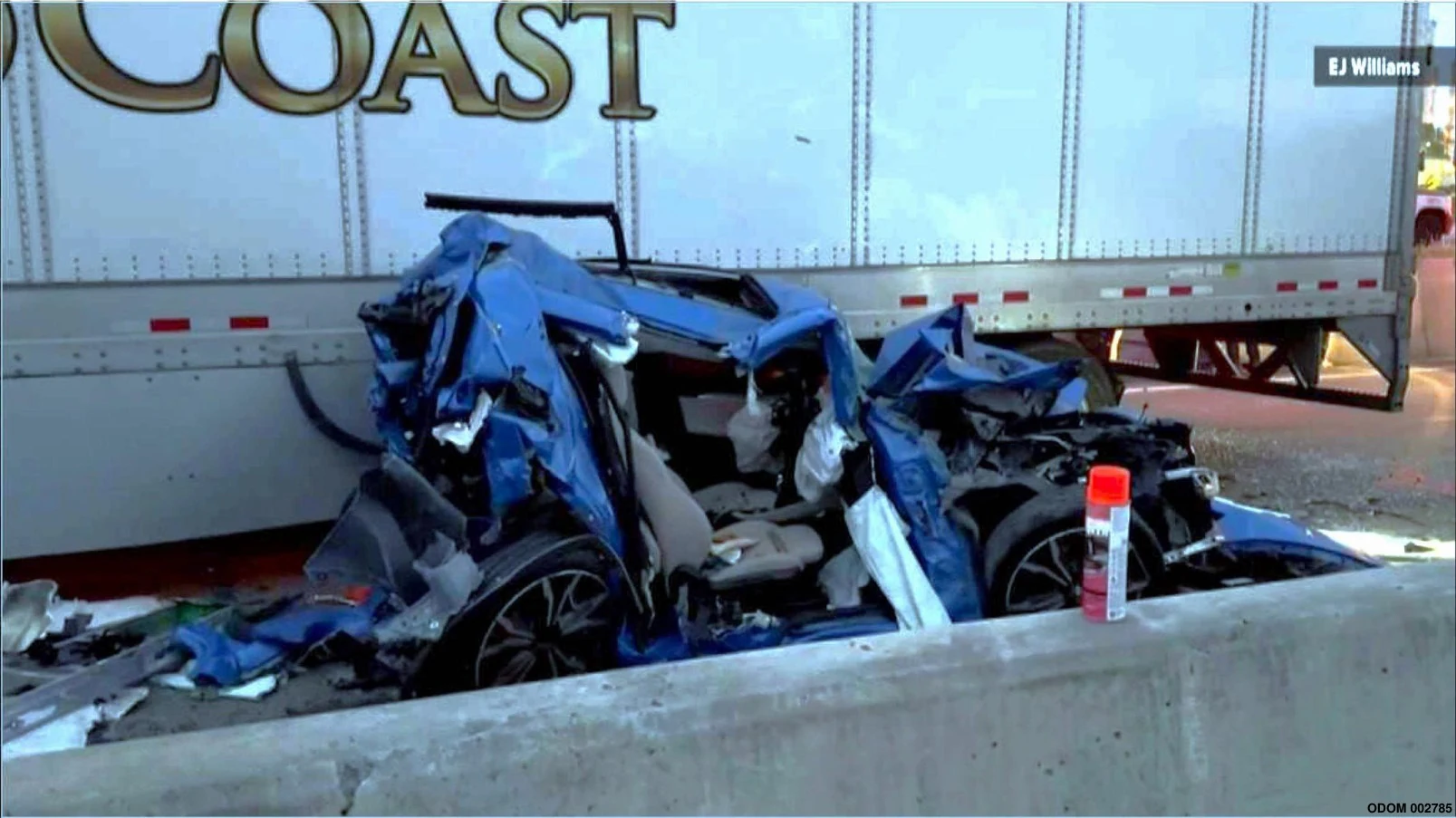
The Dallas verdict and October update
On July 23, 2026, a Dallas County jury returned a $604,025,000 damages verdict in Lipe v. Lupus Superior, a case arising from a fatal truck crash in Mississippi. The defendants included the carrier, its driver and freight broker C.H. Robinson Worldwide, Inc.
The jury attributed 23 percent of the responsibility to C.H. Robinson and also found it responsible for the driver's conduct. The company's securities filing states that the findings could expose it to joint and several liability for the entire damages award. The broker's potential responsibility therefore cannot be reduced to multiplying the verdict by its own percentage of fault.
On October 16, the trial judge upheld the jury's ruling. FreightWaves reported approximately $107 million in prejudgment interest, bringing the reported judgment above $700 million. C.H. Robinson confirms that the judge upheld the ruling and says it is appealing. The award does not establish what the company will ultimately pay; the judgment remains subject to appellate review.
The companies behind the shipment
A truck crash investigation may involve four different roles. The driver operates the truck. The motor carrier provides the transportation. A freight broker arranges transportation by selecting a carrier. The shipper sends the goods being hauled.
The legal question is what each company actually did. Contracts, shipping records and testimony may show that a business performed a role different from the label it used. A company described as a shipper in one document may have accepted transportation responsibilities that require a closer examination.
Insurance and the ability to pay a judgment matter to a family facing medical bills or the loss of a household's income. But another company's financial resources do not establish liability. The evidence must connect that company to a legal duty and the harm.
What Montgomery changed for families
For years, federal courts disagreed about whether the Federal Aviation Administration Authorization Act barred state negligence claims against freight brokers. That statute limits state regulation of trucking prices, routes and services, while preserving state authority over motor-vehicle safety.
On May 14, 2026, the United States Supreme Court unanimously held in Montgomery v. Caribe Transport II, LLC that the negligent-hiring claim before it fell within that safety exception. The Court reversed the decision blocking the claim and sent the case back for further proceedings.
For a family, the practical change is that this federal preemption defense no longer blocks a negligent-selection claim of the kind the Court addressed. The decision does not establish that a broker was negligent or create a uniform negligence claim in every state. The applicable state law, the broker's conduct and the connection to the crash still matter.
What the carrier's safety records can show
Carrier-selection evidence can include inspection results, out-of-service information, crash records and the broker's own screening file. The Federal Motor Carrier Safety Administration, or FMCSA, makes substantial carrier information available publicly, but some data and scores are restricted. A reportable crash does not by itself establish that the carrier caused it.
English-language proficiency is one part of driver qualification. In its August 10, 2026 proposed rule, FMCSA reported 60,399 English-proficiency violations and 19,045 out-of-service orders between June 25, 2025 and March 19, 2026. Those are the figures for that stated period, rather than totals through this article's October publication date.
Those national figures do not prove negligence in a particular crash. The investigation must identify the specific carrier's record, what information was available when the carrier was selected, and whether a documented qualification or safety problem contributed to the collision. A violation recorded after the crash cannot be treated as a warning the broker had beforehand.
What Home Depot means for shippers
On May 15, 2026, the Texas Supreme Court addressed a different question in In re Home Depot U.S.A., Inc. It held that the allegations against a passive shipper of ordinary cargo did not establish a duty to prevent an independent motor carrier's negligence.
The court distinguished circumstances involving control over the injury-producing work or conduct that creates or increases the danger. It expressly left unresolved what duties might arise from unusually hazardous cargo. The opinion does not establish an automatic duty whenever a shipper loads a trailer, sets a delivery time or maintains a carrier-selection program.
The court also noted that it had not definitively resolved the existence, elements or scope of negligent-hiring or retention claims. For a family, the practical point is that ownership of the cargo alone does not establish responsibility. Any claim against a shipper must be supported by the applicable law and evidence connecting its conduct or control to the harm.
What the investigation needs to establish
The first task is to reconstruct the transportation arrangement. The bill of lading records the shipment and identifies participants. A load tender offers the shipment for transport, and a rate confirmation records the agreed transportation terms. Together with contracts, dispatch records and carrier-screening files, these documents help establish who made the decisions that matter.
We examine the driver's conduct, the carrier's responsibilities, how the carrier was selected and whether another company accepted or exercised control over the transportation. Calling a driver an independent contractor does not, by itself, answer every question about a motor carrier's responsibility. Each claim needs its own factual and legal basis.
Preserving those records early is part of the work. Families ordinarily do not have the load tender, the broker's selection file or the contracts. Written preservation requests and the discovery process help us obtain the evidence needed to evaluate responsibility.
What the court decided in Rogers
The Rogers case shows why the transportation documents matter. VB Attorneys represents members of Brandon Rogers's family in a wrongful death lawsuit arising from an April 15, 2023 truck collision on Interstate 10 in Jefferson County, Texas.
On September 22, 2026, the court ruled that Anheuser-Busch, LLC was a motor carrier for the shipment and the statutory employer of driver Leandre Sime. It held Anheuser-Busch vicariously liable for Sime's negligence, "if any." In plain English, the ruling establishes the relationship that makes Anheuser-Busch answer for the driver's negligence if that negligence is proved. It does not decide negligence, causation or damages.
The April 14, 2023 bill of lading listed "Beyond Beer" in its carrier field. The plaintiffs' filed petition identifies Beyond Beer as an internal Anheuser-Busch business unit. A separate agreement amendment described Anheuser-Busch as the shipper and Archerhub, LLC as the carrier. Those descriptions had to be examined alongside the other evidence about the transportation arrangement.
Brendan Fradkin and I worked on the motor-carrier and statutory-employer issues, with Matt Kita assisting on the briefing. The court's ruling concerns this shipment and this record. It does not make every business whose goods travel on a truck the driver's statutory employer.
For families, the distinction is practical. The crash report helps explain how the collision happened. Shipping records can help establish which companies bear legal responsibility. Our article on the Rogers rulings explains the documents, the court's decisions and the questions that remain.
Questions families ask us
Can I sue a freight broker after a truck accident?
Potentially, yes. Montgomery removes the federal preemption barrier addressed in that case. You still need a claim supported by the applicable state law and evidence of the broker's negligence and its connection to the harm.
Who can be sued after an 18-wheeler crash?
Potentially the driver, the motor carrier, a freight broker and, where the law and facts support it, a shipper or another transportation participant. A company's role must be investigated before responsibility can be established.
How do I find out which broker arranged the load?
The bill of lading, load tender, rate confirmation and transportation contracts can help identify the participants. We seek those records and request that relevant evidence be preserved. A family does not need to identify every company before contacting us.
Does this apply to wrongful death cases?
Yes. In Texas, a surviving spouse, children and parents may bring wrongful death claims, and a survival claim may be brought on behalf of the estate. A broker or another company can be included when the evidence and law support responsibility. Texas generally has a two-year filing deadline, but exceptions and other deadlines can affect a particular case.
What does it cost to hire a lawyer for this?
The first conversation is free. We handle these cases on a contingent fee, with no attorney's fee unless we win. We explain the fee agreement and how case expenses are handled before you decide whether to hire us.
What if the trucking company has almost no insurance?
Limited insurance makes it important to investigate the full transportation arrangement and any other potentially responsible companies. It does not automatically make a broker or shipper liable, and it does not determine whether additional compensation will be available.
Sources
Montgomery v. Caribe Transport II, LLC, No. 24-1238, United States Supreme Court, May 14, 2026.
In re Home Depot U.S.A., Inc., No. 25-0317, Supreme Court of Texas, May 15, 2026.
Rogers litigation, Cause No. 23DCCV0514, 60th Judicial District Court, Jefferson County, Texas: signed September 22, 2026 motor-carrier and statutory-employer order; April 14, 2023 bill of lading; August 19, 2026 Ninth Amended Petition; February 27, 2023 agreement amendment; and the published Rogers article.
Texas Civil Practice and Remedies Code, sections 71.004, 71.021 and 16.003: wrongful death beneficiaries, survival claims and general limitations period.