In March 2015, Houston Pilots suspended new pilot boardings for inbound deep-draft vessels at the sea buoy because of fog. Inbound ships already under way continued their transits, and the suspension did not apply to outbound traffic. About an hour later, the bulk carrier Conti Peridot crossed into the path of the tanker Carla Maersk near Morgan’s Point. That distinction matters: a notice halting new pilot boardings does not necessarily stop every vessel already in the channel. NTSB report
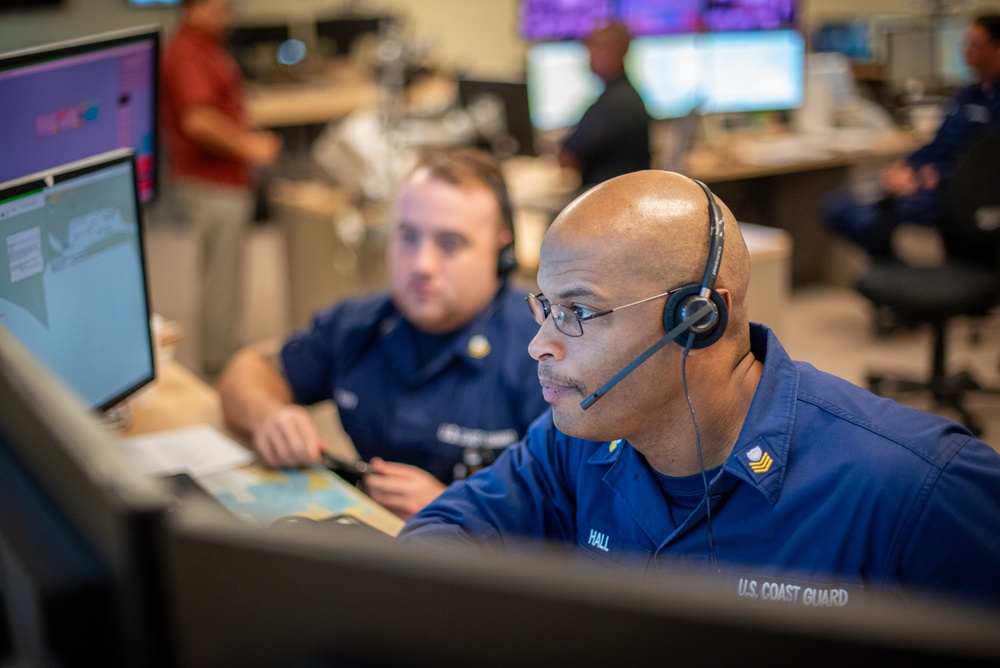
U.S. Coast Guard photo by Petty Officer 1st Class Corinne Zilnicki, October 24, 2023, via DVIDS. Use of this image does not imply Coast Guard endorsement.
When does fog affect the Houston Ship Channel?
The National Weather Service describes December through March as a common period for sea fog over the northern Gulf. January and February often provide favorable conditions, but the calendar doesn’t decide whether a ship can move. The two collisions discussed here both happened in March. Warm, humid air passing over cooler water can produce sea fog, and visibility can vary along the same route. National Weather Service fog guide
Does a fog closure stop all traffic?
Not necessarily. A notice might suspend new pilot boardings or limit movements in a particular stretch of the channel. U.S. Coast Guard Vessel Traffic Service can also direct when vessels may enter, move or depart during restricted visibility. Look for the exact wording, area, time and vessels covered. Check Coast Guard Houston–Galveston port status and current VTS advisories, not this article, for operating information. 33 CFR § 161.11
What do the navigation rules require in fog?
The Inland Navigation Rules require a proper lookout and safe speed. Rule 19 specifically addresses vessels that are not in sight of one another while navigating in or near restricted visibility. It requires a speed appropriate to those conditions and requires power-driven vessels to keep their engines ready for immediate maneuver. The rules also address assessing collision risk and sounding signals in restricted visibility. They do not set one speed for every ship and every stretch of the channel. Inland Navigation Rules 5, 6, 7, 19 and 35
Two collisions show why fog alone does not explain the impact
- Lower Galveston Bay, March 2014. The NTSB found that the Miss Susan tow tried to cross ahead of the Summer Wind, which could transit only within the channel. It also identified speed in restricted visibility, late radio communication, and the traffic service’s response as contributing factors. NTSB investigation
- Morgan’s Point, March 2015. The NTSB found that the Conti Peridot’s pilot could not respond appropriately to the forces acting on the ship after meeting another vessel and did not warn other vessels about the handling difficulty. The NTSB also cited coordination between the captain and pilot. NTSB investigation
What evidence would I look for after a Ship Channel collision?
I would start with three times: when visibility dropped where the vessel was, when the bridge team first detected the other vessel, and when someone ordered a change in speed or course. Then I would check those times against the original bridge audio and voyage data recorder files, radar and vessel tracks, VTS radio recordings and notices, and any saved logs from the pilot’s portable navigation unit. Weather reports help establish conditions, but one observation does not necessarily reflect what the crew could see at the point of impact. A vessel track helps establish movement; on its own, it cannot tell you what anyone on the bridge saw, heard or said.
A safety investigation, a criminal prosecution and a civil claim answer different questions. Read my separate explanation of the Houston Ship Channel pilot indictment for how investigators and litigants can use phone records. It concerns a different collision. If you worked aboard a vessel and suffered an injury, our Houston Jones Act guide explains the questions about employer negligence and seaman status.
Tell us what happened | Free, confidential case review.