The Lifetime Cost, in Plain English
A prosthetic limb is not a one-time purchase. A lower-limb prosthesis for an active working person typically requires replacement every three to five years; a microprocessor knee or an advanced upper-extremity device may cost $70,000 to $100,000 per unit, and the technology continues to evolve. Across a statistical lifetime, the prosthetic costs alone can exceed a million dollars — before accounting for anything else the injury requires.
- Prosthetics on replacement cycles. Every device has a lifespan. Each replacement is a cost. Multiply by the years left in a statistical lifetime.
- Revision surgeries. Residual limbs change over time; socket fits fail; bone overgrowth develops. Revision surgery is not a complication — it is an expected part of life after amputation, and it belongs in the damages.
- Phantom pain. Pain in a limb that is no longer there is a documented, treatable medical condition. It is also compensable, and the treatment costs are real.
- Retraining and lost earning capacity. A machinist who loses a dominant hand, a maritime worker who loses a foot, a lineman who loses an arm — each faces a career that may be gone entirely. A vocational expert analyzes what the injured person could earn before, what they can earn now, and what the gap costs across a working lifetime.
Every case here is prepared the same way: your lawyer leads it, an experienced trial lawyer supported by a partner Board Certified in Personal Injury Trial Law by the Texas Board of Legal Specialization, a distinction held by less than 1% of Texas lawyers. The decision to settle or try the case is always yours. The full four-step approach is on our Personal Injury page.
The Law That Applies
On land, the available claims depend on who employed the injured worker, who controlled the work, and what caused the injury. Texas Civil Practice and Remedies Code Chapter 95 can limit claims against owners of commercial or business property when a contractor’s injury arises from the condition or use of the same improvement the contractor was constructing, repairing, renovating, or modifying. It does not govern every workplace injury simply because it happened on someone else’s property.
When Chapter 95 applies, the worker must establish both that the owner retained or exercised control over how the contractor performed the work—not merely a right to stop work or inspect progress—and that the owner actually knew of the danger and failed to warn adequately. A dangerous condition alone does not satisfy that test. Nor does a defect automatically fall outside Chapter 95 because it existed before the work began: the Texas Supreme Court’s same-improvement analysis matters. Claims against a machine manufacturer or another responsible third party require their own liability analysis; workers’ compensation benefits may coexist with a qualifying third-party claim.
On the water, the Jones Act (46 U.S.C. § 30104) protects seamen injured in the service of a vessel. Maintenance and cure provides immediate benefits; a negligence claim under the Jones Act and an unseaworthiness claim against the vessel owner both survive for three years from the date of injury. Offshore amputation cases almost always involve both the Jones Act and general maritime law, and the interaction between the two determines the full scope of what can be recovered.
A Result That Shows the Approach
A Winch, a Boot, and the Rest of a Working Life
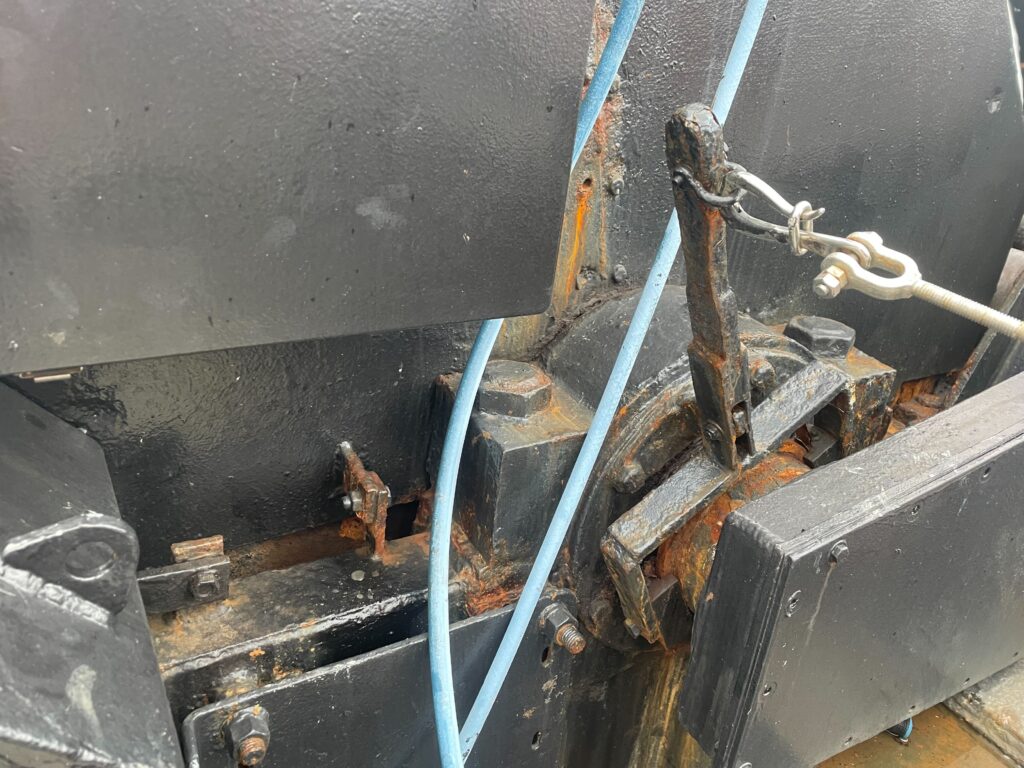
A maritime worker’s foot was crushed by a winch. We built the lifetime cost — prosthetics, revisions, the maritime career that ended on that deck — and resolved the case confidentially for an amount that covered it.
“On the way to the hospital, I didn’t even think anything was that bad — till they took my boot off.” — Stephen Dufrene · Maritime Crush Injury Case
See the maritime winch-crush amputation settlement.
Go Deeper
- Construction Accidents: Contractor roles, property conditions and evidence after a worksite injury.
- Personal Injury: The hub — how every injury case gets valued for a lifetime, not a hospital bill.
- Traumatic Brain Injury: Proving the injury the scans don’t show.
- Spinal Cord Injury & Paralysis: Lifetime care, priced and proven.
- Severe Burn Injuries: Reconstruction, thermoregulation, and who caused the fire.
- Maritime Injuries: When the injury happened on or around a vessel, different law applies — and different deadlines too.

