Summary: A longshoreman loads and unloads cargo ships at the dock. He is covered by the Longshore and Harbor Workers’ Compensation Act, not the Jones Act, which means compensation from his employer and, when the ship’s own negligence caused the injury, a separate claim against the vessel. In general, he must give his employer notice of an injury within 30 days.
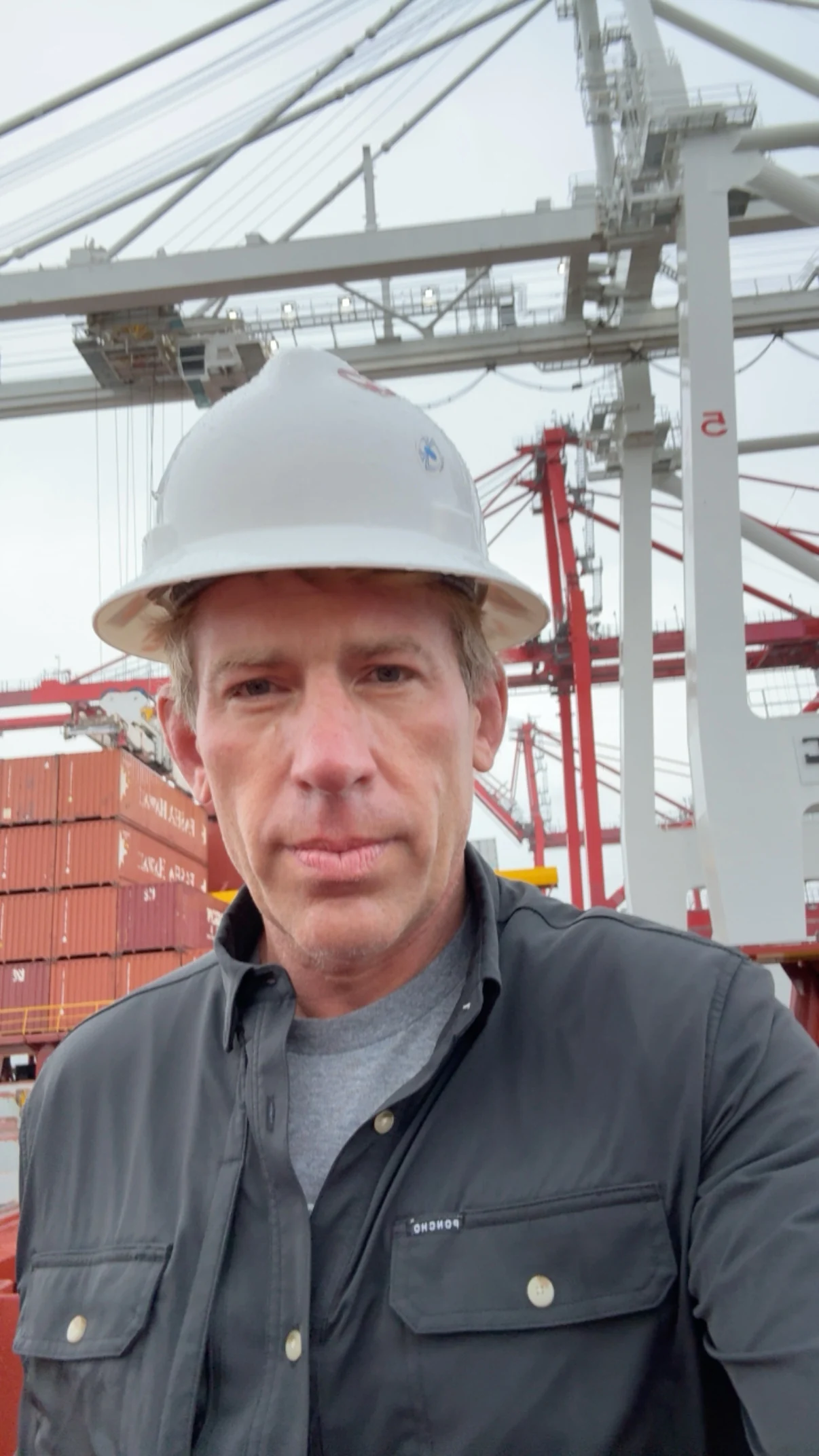
When a cargo ship ties up at a Texas terminal, longshoremen tie it to the dock, free the cargo, work with the crane operator who lifts it off, and drive whatever can be driven down the ramp. When the ship sails, they are the ones who put the next load aboard. The work runs at all hours, on the dock and on the ship, in the same few feet of steel that cranes, forklifts, and container handlers travel through.
In Corpus Christi, a stevedore working aboard a cargo ship was in the path of a gantry crane when it moved. The crane crushed him. His injuries were multiple and catastrophic, and they will need medical treatment for the rest of his life. His case, led by Vuk Vujasinovic of VB Attorneys in federal court in Corpus Christi, resolved for a confidential amount. It shows the two facts every longshoreman should know. The job puts people on foot where heavy machinery moves. And the law that protects a longshoreman when he is hurt is not the law that protects the ship’s crew.
What does a longshoreman do on a shift?
The core of the job is moving cargo between the ship and the shore. Linehandlers tie the ship to the dock when it arrives. On a container ship, longshoremen release the lashings that hold the boxes to the deck, signal the gantry crane operator who lifts each container off, and drive the trucks and yard equipment that carry it to the stack. When the cargo can be driven, such as cars or farm machinery, longshoremen drive it on and off. Some inspect and repair the containers themselves.
The pace is set by the ship, and it is fast. Maryland Public Television’s guide to the Port of Baltimore puts it plainly: what used to take up to two weeks to unload can now be done in a few hours, and a ship carrying 5,000 containers can be unloaded in 15 hours. That speed is the point of a modern port, and it is also why the job is dangerous. A lasher on a container stack works stories above the deck. A worker on the apron stands where the crane sets the box down. The rules about who may stand where, and who is watching, exist because the machine does not stop on its own.
At the Port of Baltimore, longshoremen are trained by their union, the International Longshoremen’s Association, in everything from forklifts and heavy equipment to container and chassis repair. The job is skilled and it is physical, and the same person may lash containers one shift and drive a container handler the next.
Is a longshoreman the same as a stevedore or a seaman?
A longshoreman and a stevedore are, for most purposes, the same worker. In the older usage, the stevedore is the company that contracts to load and unload the ship, and the workers it hires are longshoremen. On the Texas coast the two words are used for the same person, and our own case result calls the man crushed in Corpus Christi a stevedore. Either way, he works for a shore-side employer, comes aboard to work cargo, and goes home when the cargo is done.
A seaman is different. A seaman is a member of the crew. The Supreme Court set the test in Chandris, Inc. v. Latsis in 1995: a seaman’s duties contribute to the function of the vessel or the accomplishment of its mission, and his connection to a vessel in navigation, or to a fleet of vessels, is substantial in both duration and nature. The Court added a rule of thumb. A worker who spends less than about 30 percent of his time in the service of a vessel in navigation generally should not qualify as a seaman. The Court called that figure a guideline, not a wall.
That difference decides everything that follows. A seaman who is hurt has the Jones Act, which lets him sue his employer for negligence in front of a jury, plus claims under the general maritime law for an unseaworthy vessel and for maintenance and cure. A longshoreman does not have those claims against his employer. He has a compensation system instead.
What law covers a longshoreman who gets hurt?
The Longshore and Harbor Workers’ Compensation Act covers him. It is a federal compensation system for people in maritime employment who are not crew, including longshoremen, ship repairers, shipbuilders, and other harbor workers. It applies to injuries on the navigable waters of the United States and on the adjoining piers, wharves, dry docks, terminals, and other areas an employer customarily uses to load, unload, repair, or build a vessel. It expressly leaves out the master and the members of a vessel’s crew. Those are the seamen.
Under the Act, the employer pays for medical care and, for a worker who cannot work at all, two-thirds of his average weekly wage, whether or not anyone was at fault. In exchange, the worker generally cannot sue his employer. That is the trade every compensation system makes. The deadlines are short. In general, the worker must give his employer notice within 30 days of the injury and file a claim within one year. The program is run by the United States Department of Labor.
Can a longshoreman sue the ship?
Yes, when the ship’s own negligence caused the injury. The compensation system covers the employer. It does not cover the vessel. Section 905(b) of the Act preserves a longshoreman’s right to sue the vessel owner, and the Supreme Court described the vessel’s duties in Scindia Steam Navigation Co. v. De los Santos in 1981. The vessel must turn the ship over in a reasonably safe condition and warn of hazards the longshoremen cannot see for themselves. It must avoid injuring workers in the areas its crew still controls. And it must step in when it knows a dangerous condition has developed and the stevedore is not dealing with it.
A claim against the vessel is a negligence claim for the full measure of the worker’s loss: his medical care, his lost earnings, and his pain. In a catastrophic case, that claim is usually where the case is decided. In general, it must be brought within three years. The evidence will not wait that long. The ship’s logs, the crane records, and the crew all leave port when the ship does.
Why does the seaman question matter?
The first question in any maritime injury case is not what happened. It is who the injured man was when it happened. A worker with Jones Act rights gets a jury trial against his employer. A worker under the Longshore Act does not. Companies know the difference, and they argue for the label that costs them less. A man who spends most of his working life aboard a company’s barges, tugs, or supply vessels may be a seaman even if his payroll title says something else. A man who comes aboard only to work cargo is not, however many hours he spends on deck that week. The answer comes from the person’s actual work, measured against the Chandris test, and it should be settled before anyone signs anything.
For how that question played out for one young mariner on the Houston Ship Channel, read Houston Ship Channel Injuries: Lessons From Hubbard v. Weeks Marine.
If you work on the water and you are not sure which law covers you, that question has a real answer. Tell us what happened.
Questions people ask
What does a longshoreman do?
A longshoreman loads and unloads ships. Longshoremen tie ships to the dock, release the lashings on containers, work with the gantry crane operator, drive cars and machinery on and off, and move cargo through the terminal. A ship carrying 5,000 containers can be unloaded in about 15 hours, which is why the work is fast, physical, and dangerous.
What is the difference between a longshoreman and a seaman?
A longshoreman works for a shore-side employer and comes aboard to work cargo. A seaman is a member of a vessel’s crew. Under Chandris, Inc. v. Latsis, a seaman’s duties contribute to the vessel’s function or mission and his connection to a vessel in navigation is substantial in duration and nature, with about 30 percent of working time in the service of a vessel as the usual guideline. The difference decides whether the worker has Jones Act rights or compensation rights.
Is a longshoreman covered by the Jones Act?
In general, no. The Jones Act covers seamen. A longshoreman is covered by the Longshore and Harbor Workers’ Compensation Act, which expressly excludes a master or member of a crew of any vessel. Whether a particular worker is a longshoreman or a seaman depends on his actual work, not his job title.
Can a longshoreman sue the ship he was hurt on?
Yes, when the vessel’s negligence caused the injury. Section 905(b) of the Longshore and Harbor Workers’ Compensation Act preserves a claim against the vessel owner, separate from compensation paid by the employer, for the full measure of the worker’s loss. In general, that claim must be brought within three years.
How long does a longshoreman have to report an injury?
In general, 30 days. The Longshore and Harbor Workers’ Compensation Act requires notice to the employer within 30 days of the injury, or of when the worker knew or should have known the injury was related to his work, and a claim within one year. Do not wait on either. The ship, the crane records, and the witnesses leave port long before any deadline does.
Sources
- Longshore and Harbor Workers’ Compensation Act, 33 U.S.C. 901 and following, including sections 902(3), 903(a), 905(b), 908, 912(a), and 913(a). uscode.house.gov
- United States Department of Labor, Office of Workers’ Compensation Programs, Longshore and Harbor Workers’ Compensation Act. dol.gov
- Chandris, Inc. v. Latsis, 515 U.S. 347 (1995). supreme.justia.com
- Scindia Steam Navigation Co. v. De los Santos, 451 U.S. 156 (1981). supreme.justia.com
- 46 U.S.C. 30106, three-year limit for maritime personal injury claims. uscode.house.gov
- Maryland Public Television, PORT: A Transportation System, Longshoreman. port.thinkport.org
- VB Attorneys, Confidential Recovery, Stevedore Crushed by a Gantry Crane in Corpus Christi. vbattorneys.com