Federal maritime litigation examines vessel management, fuel-system failures and the law governing injury and wrongful death claims.
HOUSTON, October 13, 2026: Brian Beckcom and VB Attorneys are challenging efforts to limit shipowner liability following the fatal fire aboard the M/V Stride at Port Houston. The case places the vessel’s equipment, corporate safety procedures and management responsibilities at the center of federal maritime litigation.
Brian Beckcom and Brendan Fradkin represent members of the family of the Stride’s chief engineer, who died in the January 8, 2024 fire at Barbours Cut Marine Terminal in La Porte, Texas. Two crewmembers died and another sustained serious burn injuries when a bunkering operation, the transfer of fuel from a barge to the ship, ended in an engine-room fire.
Challenging the proposed liability limits
The litigation is pending in the U.S. District Court for the Southern District of Texas, Houston Division, Case No. 4:24-cv-02540. A central dispute concerns the Limitation of Liability Act, a federal maritime statute that can allow a qualifying vessel owner to limit certain liabilities to the vessel’s value and pending freight when the statutory conditions are met.
In their original July 5, 2024 limitation complaint, Danaos Shipping Co. Ltd. and Speedcarrier No. 3 Corp. sought security of $481,785, based on an asserted post-fire vessel value of $416,160 and pending freight of $65,625. That was the petitioners’ proposed security. It did not establish the value of the family’s claims or the shipowner’s entitlement to limit liability.
VB Attorneys has pursued challenges to both entitlement to limitation and the amount of the limitation fund. The claimants filed a summary judgment motion on June 3, 2026, followed by a motion to increase the fund on June 5.
The work requires examining which entities qualify for limitation, whether the casualty occurred with the owner’s legally relevant involvement or knowledge, and how the statute’s separate provisions for certain personal injury and death claims affect the fund. The owner’s privity or knowledge is a central issue: what responsible managers knew, and what their duties required them to know, about the conditions that caused the casualty.
Connecting the fire to vessel management
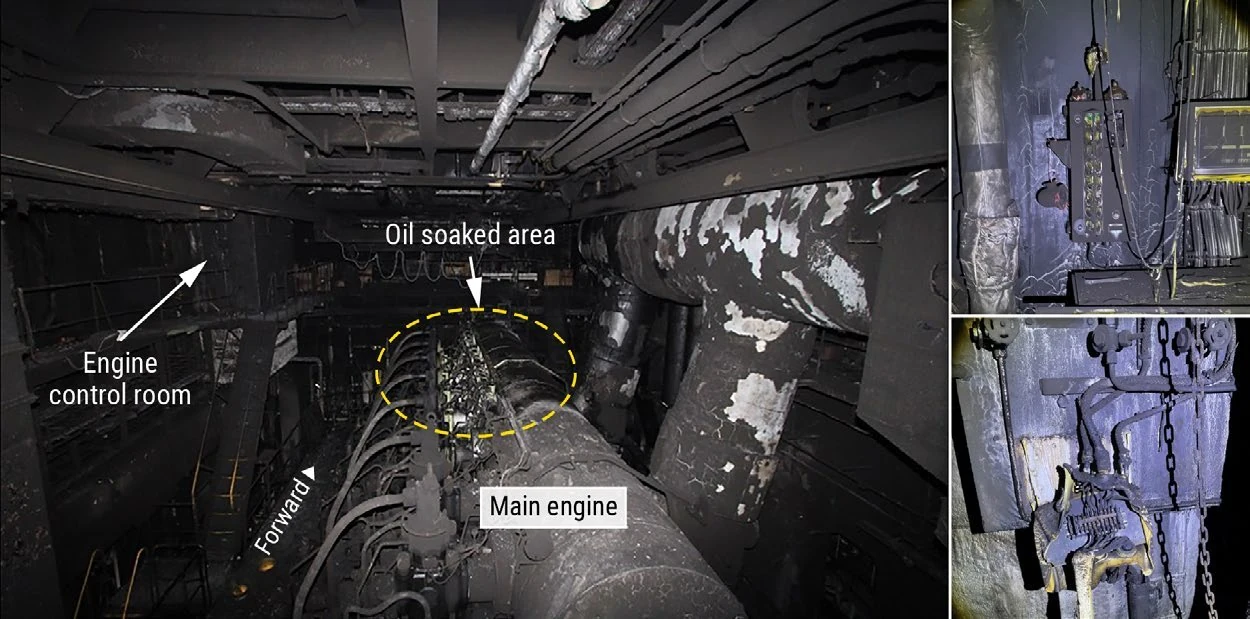
The National Transportation Safety Board’s final report identified an incorrect replacement valve that blocked diesel from entering one tank. Fuel filled the other tank, rose through shared vent piping and escaped through a cut opening covered with flexible material and tape. Diesel then entered the engine room and ignited. Inadequate tank-level monitoring was a contributing factor.
The firm’s investigation and discovery have examined the records behind those physical failures: the valve requisition and supply process, vessel drawings, maintenance and inspection procedures, tank monitoring, company safety requirements and the responsibilities of the owner and manager.
That evidence addresses whether the casualty arose from conditions within the vessel interests’ management responsibilities. Speedcarrier owned the vessel, while Danaos Shipping performed vessel-management functions. The litigation examines the actual purchasing, technical, crewing and safety roles behind those corporate names.
Deposition work has tested how a fuel-system valve moved through the company’s supply process without technical review and how a directed inspection could reach the vent-pipe opening. In testimony during Brendan Fradkin’s examination, the company’s safety witness agreed that the correct valve would have prevented the casualty, while explaining that the fire resulted from several failures acting together.
The company denies prior knowledge of the vent cutout, and its origin remains unknown. The claimants’ case examines the inspection and maintenance responsibilities that applied before the fire. The physical evidence and testimony inform those issues; the federal court decides the legal consequences.
Maritime injury, burns and wrongful death
A fatal vessel fire presents several distinct legal questions. The case requires analysis of maritime negligence, the vessel’s seaworthiness, wrongful death and survival remedies, employer responsibility and the application of the Jones Act and other maritime law. These issues determine which parties can be held responsible, what damages may be available and how the claims proceed alongside the shipowner’s limitation petition.
The Jones Act provides a negligence remedy against the employer of a qualifying seaman. Its application must be evaluated from the governing law and employment relationship in the particular case. Establishing that relationship and addressing a limitation petition are separate parts of maritime litigation.
VB Attorneys’ broader maritime practice includes serious burn and other catastrophic injury cases, Jones Act claims and maritime wrongful death. Its work in the Stride litigation combines technical investigation, company-witness examinations, expert preparation and federal motion practice. The chief engineer’s family’s claims remain pending.
About VB Attorneys
VB Attorneys is a Houston trial firm representing people with catastrophic injuries and families who have lost loved ones. The firm handles maritime injury, Jones Act, wrongful death, commercial trucking and industrial injury cases. Brian Beckcom is Board Certified in Personal Injury Trial Law by the Texas Board of Legal Specialization.
Media contact
VB Attorneys
(877) 724-7800
www.vbattorneys.com