The other driver says you caused the crash. An insurance adjuster repeats that account. Neither statement decides the case. The question is what the evidence can establish—and whether your lawyer can connect that evidence to the legal issues a court must decide.
Brian Beckcom and Vuk Vujasinovic handle cases in which responsibility is contested. Their work includes examining physical evidence, testing accounts through sworn testimony, and locating records that do not depend on either driver’s memory.
A denial is the beginning of the investigation, not its conclusion
Some disputes concern the collision itself: who changed lanes, who had the signal, or whether a driver had time to react. Others concern the injury: whether the collision caused a condition, aggravated an existing problem, or explains the treatment that followed. A strong case separates those questions rather than treating a serious injury as proof of fault.
Start with a precise account of the disagreement. “They blame me” is important, but a lawyer needs to know what they claim you did and what supports that claim. That creates a concrete investigation: the signal sequence, the truck’s path, the timing of a lane change, or the medical history before and after impact.
The evidence must show more than a safety violation
In Werner Enterprises, Inc. v. Blake, decided June 27, 2025, the Texas Supreme Court emphasized that negligence requires substantial-factor causation, not just a sequence in which an injury would not have occurred but for the defendant’s presence. The Court reversed the judgment against the trucking defendants on the facts before it.
For an injured person’s case, that makes the practical question critical: how did the particular conduct cause the collision or injury? A rule violation with no proven causal connection is not a substitute for that answer.
Build a timeline that can be checked
A useful timeline brings independent sources together:
- Video: the original recording, the camera’s view, and whether its clock was accurate.
- Vehicle information: available braking, speed, steering, or location data, interpreted with the equipment’s limitations in mind.
- Scene evidence: lane markings, impact locations, debris, damage patterns, sight lines, lighting, and road configuration.
- Witness accounts: what each person actually saw, from where, and for how long.
- Documents: dispatch instructions, relevant communications, and records tied to the driver or vehicle.
Two records with different timestamps do not necessarily contradict each other. Their clocks may differ. A witness may accurately describe only one part of a collision. The work is to test those limitations, not force every item into the preferred version of events.
Develop testimony without inventing a story
Good testimony starts with truthful recollection. A lawyer can help a witness distinguish personal observation from inference and explain an unfamiliar road layout. The lawyer must not supply facts the witness does not remember.
Texas procedure provides tools for obtaining documents, inspecting relevant items, and questioning witnesses under oath. For example, Rules 196 and 199 address production and inspection and oral depositions. The applicable discovery limits, objections, privileges, and court orders still matter. Filing suit does not make every company document available.
A deposition can test a driver’s explanation against photographs or records. Expert testimony may help explain reconstruction or medical causation, but it must satisfy the governing standards; Texas Rule of Evidence 702 addresses expert testimony. An impressive animation does not cure an unsupported assumption.
Two examples of evidence changing the case
An overloaded oilfield truck and a family on the shoulder
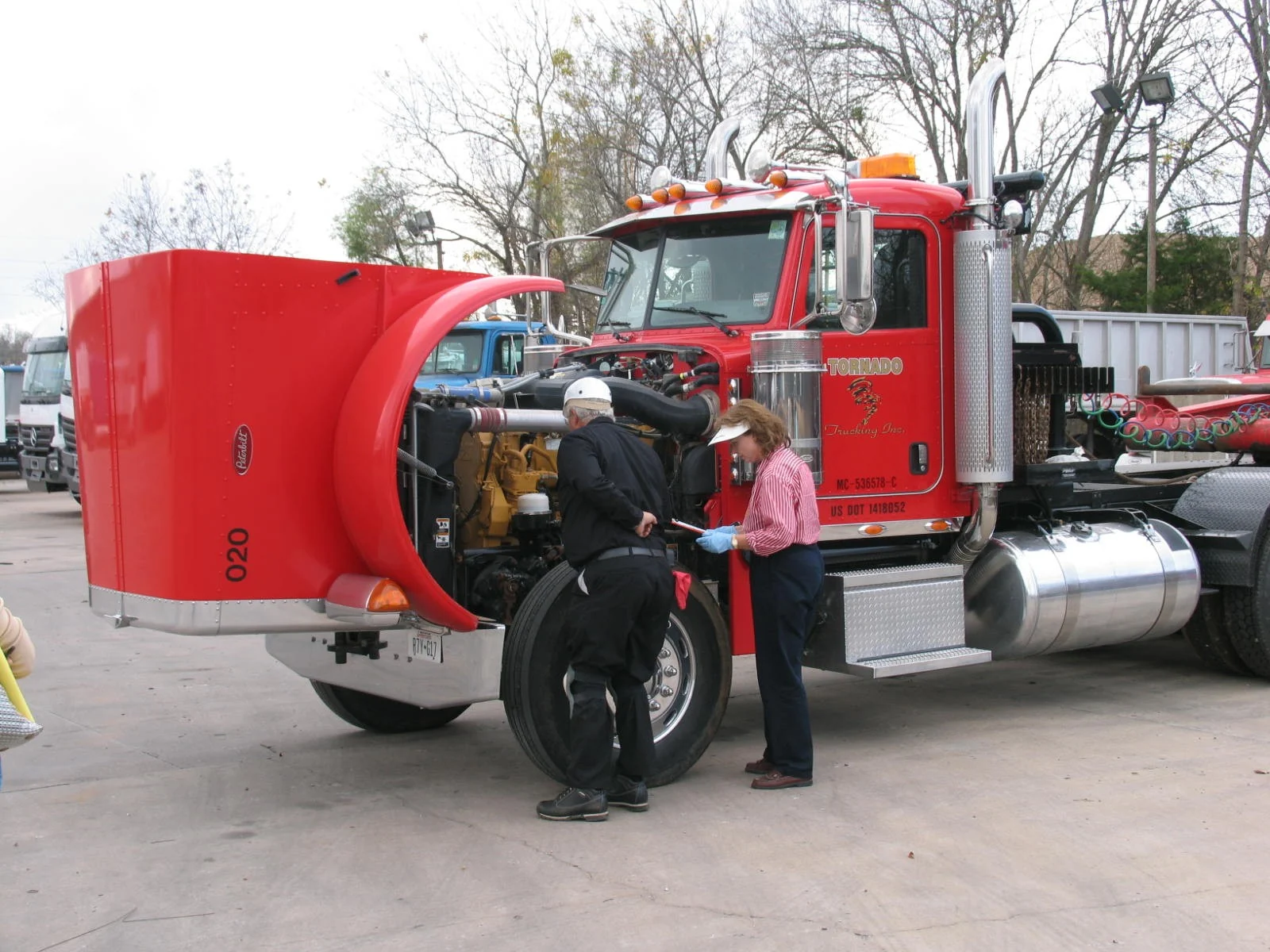
In the Tornado Trucking case, protruding equipment struck a family’s vehicle on the Highway 59 shoulder. Brian and Vuk investigated the load, company warnings, the driver’s history, and altered records. They used physical evidence, engineering work, documents, and sworn testimony rather than stopping at the driver’s account. The case ended in a $9,638,589.96 settlement.
The lesson is specific: decisions about the load before the truck reached the scene helped explain the collision at the scene.
A distracted-driving case and a disputed account
In a separate case resulting in a $29,920,310 recovery, Brian and Vuk examined recovered phone data and timestamped social-media activity before the crash. Sworn testimony addressed what the driver had been doing. Their work also challenged a defense theory about the injured driver’s condition using the medical record.
Digital information and medical evidence answered different parts of the dispute. Neither could simply replace the other.
What if the evidence shows some fault on your side?
Under Texas Civil Practice and Remedies Code Chapter 33, a claimant more than 50 percent responsible cannot recover in an action to which the statute applies. A claimant’s recoverable damages are reduced by that claimant’s percentage of responsibility. That is why a supported allocation of fault matters—not just the labels “at fault” or “not at fault.”
The insurer’s proposed percentage is not a judicial finding. Your lawyer should evaluate both favorable and unfavorable facts and explain the risks honestly.
What you can do now
Preserve original photographs and recordings. Write down your recollection while it is fresh, including what you do not know. Keep witness contact information, the report number, and insurer communications. Do not delete messages or post speculation about the crash. Tell your lawyer about unfavorable facts early, including a citation, earlier medical problem, or statement you already gave.
A police investigation can supply valuable evidence, but a report does not replace the civil case. Your lawyer must evaluate the underlying observations and any admissibility issues rather than treating every conclusion as binding.
Questions about disputed liability
Can I bring a case if the insurer denies responsibility?
A denial does not itself bar a claim. Whether a viable case exists depends on the evidence, governing law, and ability to prove the required elements.
Does my lawyer get to decide who was at fault?
No. Lawyers investigate, advise, negotiate, and present admissible evidence. If the dispute reaches trial, the judge and factfinder perform their respective roles under the law.
Will VB Attorneys consider a disputed-fault case?
Yes. Brian and Vuk evaluate contested-liability cases. They look for a defensible explanation of what happened and the evidence needed to prove it, not simply an insurer’s willingness to admit fault.
Tell Us What Happened
You do not need an admission from the other driver before seeking advice. Bring the facts you have. Read about commercial truck cases or call 877-724-7800 for a free and confidential review.