On May 5, 2023, a tug engineer was spooling new tow wire onto the winch aboard the Rebekah when the equipment crushed his left foot. The wire did not meet the drum’s specifications, the winch had been altered, and the guard was missing. He lost part of his foot. I led his Jones Act case, which ended in a Confidential Settlement in November 2025. Read the tug engineer’s case.
When we discuss America’s maritime future, we need to account for people like him. Ships need experienced seamen to operate them. Those seamen need safe equipment and medical care when they are hurt. America’s maritime strength depends on those workers as well as the yards that build its vessels.
On October 6, 2026, Anduril Industries announced plans to invest $3.7 billion in a new shipyard at Sparrows Point in Baltimore County, Maryland. The facility, called Arsenal-2, will manufacture components for Virginia-class submarines. The Navy has awarded a contract worth up to another $2.9 billion, with payments tied to production. Initial operations are expected in 2030. Anduril’s announcement describes a substantial investment in America’s submarine industrial base.
An investment of that size raises a question that reaches beyond one company or one shipyard: what does America need to preserve today so that it can build, repair, and operate the vessels it will need tomorrow?
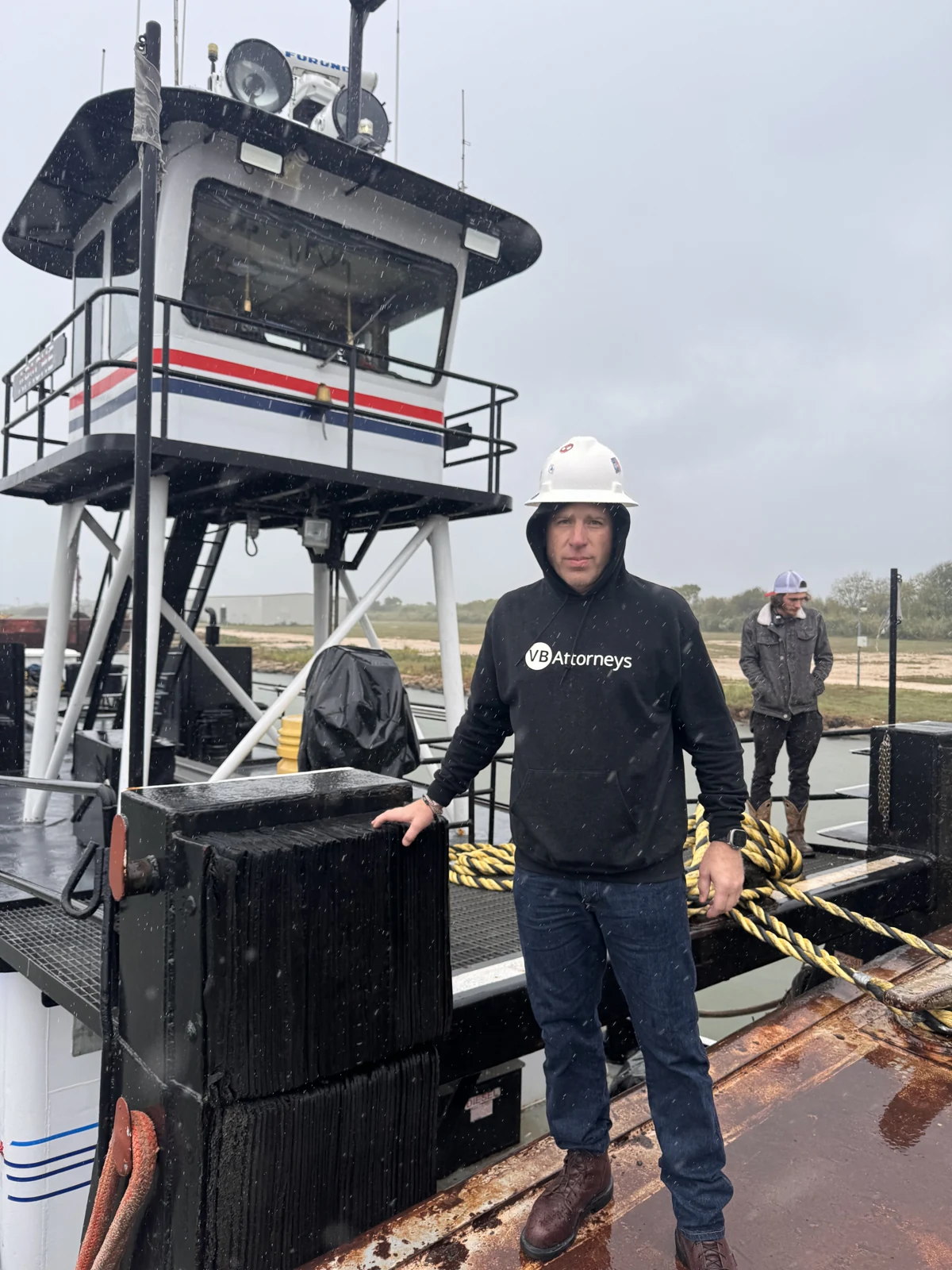
The Jones Act belongs in that discussion. It helps sustain domestic commercial demand for American-built vessels, while a separate provision protects qualifying seamen injured by their employers’ negligence. Those provisions serve different purposes. Both deserve to be understood by anyone discussing America’s maritime future.
In my earlier article, In Defense of the Jones Act, I examined the broader case for preserving the law. The Anduril announcement gives us an opportunity to examine a current example, the limits of what it proves, and why the people who work aboard vessels must remain part of the argument.
What the Anduril project shows
Arsenal-2 is a proposed facility on a historic industrial site. It is not America’s first shipyard, and Anduril is not proposing to build complete Virginia-class submarines there. Its initial role is to supply components, with plans to undertake larger assemblies over time. The established submarine builders will still perform the final construction. USNI News explains the project’s intended role.
It would be too much to say that this particular project could not exist without the Jones Act. The immediate financial foundation is Navy procurement and Anduril’s investment. Military ship construction also has separate legal protection: federal law generally prohibits building armed-forces vessels and major hull or superstructure components in foreign shipyards, subject to a presidential waiver. That restriction does not cover every miscellaneous component. The defense procurement rules explain that distinction.
The better conclusion is that America needs an industrial base capable of supporting a project like this, and the Jones Act helps sustain part of that base. Protecting commercial construction, purchasing military equipment, training workers, and modernizing shipyards are related tasks. Each contributes something the others cannot supply alone.
Commercial work supports military readiness
Under the Jones Act and related coastwise laws, merchandise carried between covered American points generally must travel on vessels that meet American construction, ownership, registration, and crewing requirements. The domestic-build requirement gives operators a reason to order vessels from American yards. The Government Accountability Office describes these requirements and their industrial consequences.
A continuing flow of commercial work can help keep workers employed, suppliers operating, and production knowledge in use. It creates opportunities to maintain and improve the skills that government customers also need.
The Congressional Research Service made the connection particularly clearly in its November 2023 report on commercial shipbuilding: “The Jones Act’s domestic construction requirement likely underpins the entirety of U.S. commercial ship construction.” Read the Congressional Research Service report.
Federal auditors have also documented the connection between commercial yards and defense work. Their June 2025 report explains that domestic commercial orders sustain private yards that support military and government construction and repair. Navy officials described using smaller yards to manufacture submarine subcomponents. Auditors visited a yard that had made hull blocks for both commercial and Navy vessels.
Commercial yards cannot instantly become submarine builders. Their continuing work can preserve workers, suppliers, facilities, and experience useful to defense production.
Philadelphia makes the connection concrete
At Hanwha Philly Shipyard, Matson is investing approximately $1 billion in three Jones Act-compliant containerships. Its May 2026 announcement documented hull assembly beginning on the second vessel and construction beginning on the third. This is domestic commercial demand producing actual construction work at an American yard. Matson’s construction update describes the program.
On October 7, 2026, TOTE Services announced a subcontract with the same yard to build the first new Missile Range Instrumentation Vessel supporting the Missile Defense Agency. TOTE says that project will use the production line, supply chain, and skilled workforce established through the yard’s maritime-academy training-ship program. The TOTE announcement describes that continuity.
The history also shows why preserving the Jones Act is only part of the work. Before receiving federal training-vessel orders, Philly faced closure when commercial orders dried up. Government procurement helped sustain the yard. Commercial construction and public investment have both contributed to a facility now taking on defense work.
That is the practical argument for preserving and improving American maritime production. A country needs a combination of continuing work, investment, training, and usable facilities. A law can support the market for those resources, but the resources still have to be developed and maintained.
Readiness also depends on seamen
Someone must operate the vessels after they leave the yard. Captains, engineers, deckhands, mates, and other crew members supply the experience that makes a merchant fleet useful. Their work connects shipbuilding policy to the movement of fuel, equipment, cargo, and supplies.
The Congressional Research Service has identified oceangoing Jones Act crews as an important source of mariners who can help operate reserve military sealift vessels. Sealift means transporting military supplies and equipment by sea. It requires experienced people as well as ships. The research service’s analysis explains the crew connection.
Rebuilding that experience takes time. A March 2026 study commissioned for the Maritime Administration found that expanding commercial ship production would require years of work on yards, workforces, and supply chains. Its estimates were scenario-dependent, and its findings are not an official Navy or Transportation Department position. The study nevertheless explains why preparation must begin before an emergency. Read the CNA maritime-strategy study.
If we value the work seamen do for the country, we should also take seriously what happens when one of them suffers a preventable injury. A damaged back, an amputated limb, or a traumatic brain injury can affect a worker’s ability to earn a living and a family’s ability to plan its future. The individual consequences deserve attention alongside the national ones.
The Jones Act protects injured seamen
The domestic shipping rules and the right of an injured seaman to sue an employer are different provisions of the Merchant Marine Act of 1920. The injury provision, now found in 46 U.S.C. §30104, allows a qualifying seaman injured in the course of employment to bring a negligence claim against the employer, with a right to a jury trial. If the injury causes death, the statute provides for an action by the seaman’s personal representative.
A seriously injured seaman may also have separate rights under general maritime law. Maintenance and cure generally provide reasonable living expenses and medical treatment until maximum medical improvement, without requiring proof of employer negligence. An unseaworthiness claim concerns an injury caused by a vessel, its equipment, or crew not being reasonably fit for their intended use. These remedies have different requirements and legal foundations. The Supreme Court explains those distinctions in Dutra Group v. Batterton.
Those distinctions matter in a real case. A negligence claim against an employer, a claim against a vessel owner for an unseaworthy condition, and an obligation to provide maintenance and cure do not become interchangeable simply because the injury happened on the water.
The worker’s status matters too. Seaman status depends on the actual duties performed and a substantial connection to a vessel or identifiable fleet in navigation. A maritime job title, an offshore location, or an injury aboard a vessel does not settle the question. The Fifth Circuit’s decision in Sanchez v. Smart Fabricators of Texas illustrates why the nature of that connection must be examined.
A shipyard announcement therefore does not mean that every person working at the yard is a Jones Act seaman. Likewise, the right to bring an injury claim does not depend solely on whether the vessel qualifies for domestic coastwise trade. The shipping rules and the injury rules answer different questions.
A serious injury requires careful investigation
I studied admiralty under Professor David W. Robertson at the University of Texas School of Law. Today, my work at VB Attorneys includes serious Jones Act injury and maritime wrongful death cases. I am Board Certified in Personal Injury Trial Law by the Texas Board of Legal Specialization. That background informs how I examine both the governing law and the evidence in a maritime case.
The work begins with what the seaman actually did, how the injury occurred, and which people or companies were responsible for the conditions involved. An accident report may be useful, but it is only one part of that inquiry.
Depending on what happened, the important evidence may include vessel logs, equipment maintenance records, crew assignments, work instructions, photographs, witness accounts, and the medical response. A winch injury may call for examining the equipment, its maintenance history, and how the work was assigned. A fall may require examining the route the worker was directed to use, the condition of the deck or stairs, and whether the employer knew about the condition.
The questions are concrete: what caused the injury, what duty applied, what could reasonably have been done, and how does the evidence connect the failure to the harm? The fact that someone was hurt does not, by itself, answer those questions.
A serious case must also account for the consequences. That can mean understanding future medical treatment, the ability to return to maritime work, lost earning capacity, and the effect of the injury on daily life. The evaluation should reflect the person’s actual condition and circumstances.
Readers looking for that practical side of the law can learn more about Jones Act injury claims and working with me on a Jones Act injury case.
Preserve the foundation and improve it
Supporting the Jones Act does not require pretending that American shipbuilding is already adequate or that its costs do not matter. The Congressional Research Service reported in 2023 that American-built ships could cost four or more times the world price. Federal auditors have documented continuing concerns about the country’s capacity to meet national-security needs.
Those are reasons to improve production, sustain useful work, and measure results. They are also reasons to examine what would replace the domestic construction demand supported by the law before removing it. The security value of a working shipyard cannot be measured solely by the price of its next commercial vessel.
I support preserving the Jones Act while building a stronger maritime industry. Anduril’s proposal illustrates the investment the country needs. Philadelphia shows how commercial construction and government work can support the same yard. Injured seamen remind us that maritime strength depends on people whose safety and future also deserve protection.
Questions injured seamen ask
Does my vessel have to be American-built for an injury claim?
No. The coastwise trade requirements do not, by themselves, determine injury coverage. A Jones Act injury claim depends on qualifying seaman status, the employment relationship, negligence, and other facts governing the claim. A vessel’s eligibility for domestic cargo service answers a different legal question.
Do I need to know which maritime law applies before calling?
No. The first review should examine your actual duties, your connection to the vessel, how the injury happened, and the available evidence. That review helps determine whether a Jones Act claim or another maritime remedy may apply. It also identifies any applicable filing deadlines.
What should I bring to the first conversation?
Bring what you already have: the vessel and employer names, the dates and description of your work, a description of the injury, and any medical records, photographs, reports, or correspondence available to you. You do not need a complete case file before seeking a review. Follow your medical provider’s instructions and describe the facts accurately.
If you or someone in your family suffered a serious injury while working aboard a vessel, tell us what happened. We can review the work you did, your connection to the vessel, and the evidence concerning the injury. Call VB Attorneys at (877) 724-7800. The first conversation is free, and you will get a straight answer.