You work on the ship. Your injury deserves a careful review.
A cruise ship is a workplace as well as a place people take vacations. Crew members move stores, maintain machinery, handle lines, prepare meals, clean cabins, serve guests, and keep the vessel operating. A serious injury can leave you unable to finish your contract or return to the work that supports your family.
You may be dealing with medical treatment far from home, an employer arranging your travel, or paperwork you do not fully understand. You should not have to guess which law applies before asking for help.
Our maritime injury lawyers review serious injuries involving shipboard workers, including:
- Deck officers, able seafarers, deckhands, and workers handling mooring lines or gangways.
- Engineers, electricians, mechanics, and engine-room personnel.
- Cooks, galley workers, food-service staff, and stewards.
- Housekeeping, laundry, cabin, and hotel-department employees.
- Entertainment, recreation, and other personnel with an ongoing assignment aboard a vessel.
This list describes jobs that may require a maritime-law analysis. It does not mean every worker in these roles has a Jones Act claim. A shoreside employee, visiting contractor, or person with only a temporary connection to a ship may be covered by different law.
What rights can an injured cruise ship employee have?
An eligible seaman may have three distinct protections: a Jones Act negligence claim against the employer, a maintenance-and-cure claim, and an unseaworthiness claim against the vessel owner. These claims address different obligations. Whether U.S. law applies must also be examined, particularly for foreign crew members and foreign-flagged ships.
1. Jones Act negligence
The Jones Act allows a seaman injured in the course of employment to pursue damages against the employer for negligence. The investigation may concern inadequate equipment, unsafe work instructions, insufficient help for a task, poor training, or a failure to respond appropriately to a known hazard.
A job title alone does not establish seaman status. The worker's duties must contribute to the vessel's function or mission, and the connection to a vessel in navigation, or an identifiable fleet, must be substantial in both duration and nature. A cruise ship's hotel and food-service work can contribute to its mission; the analysis is not limited to people who navigate the ship.
Seaman status and the application of U.S. law are separate questions. A worker can have a substantial shipboard role and still face a dispute over the governing law or where a claim must be heard.
2. Maintenance and cure
Under applicable U.S. maritime law, an eligible seaman who becomes injured or ill in the service of a vessel can have a right to maintenance and cure without proving the employer caused the condition. Maintenance concerns basic food and lodging expenses ashore. Cure concerns necessary medical care. These benefits generally continue until maximum medical improvement, subject to the rules and defenses that apply to the claim.
Receiving these benefits does not necessarily resolve a separate negligence claim. Nor does a disagreement over negligence, by itself, answer whether maintenance and cure is owed. If payments stop or medical treatment is disputed, save the correspondence and seek advice about your specific situation. Read more about maintenance and cure.
3. Unseaworthiness
An eligible seaman may also have a claim if the vessel, its equipment, or its crew was not reasonably fit for the intended work and that condition caused injury. A ship does not have to be sinking to present an unseaworthiness issue. The focus may be a piece of equipment, the way a task was staffed, or another condition affecting the work.
Unseaworthiness is a general maritime-law claim, separate from Jones Act negligence. An injury by itself does not prove either claim. Our unseaworthy vessel page explains the distinction.
What compensation may be available?
Depending on the applicable law, proven facts, and available claims, damages may include medical expenses, lost earnings, reduced future earning capacity, and compensation for pain and other effects of the injury. We examine the treatment you need, whether you can return to sea, and how the injury affects your life. No lawyer can responsibly value the case from a job title or diagnosis alone.
The investigation starts with the work you were doing
A serious crew injury often needs a more detailed explanation than the first incident report provides. We want to understand the task, who directed it, what equipment was available, and what happened afterward.
- Lifting and repetitive work: stores, food containers, luggage, laundry, or other loads; available lifting equipment and assistance; the actual workload and instructions.
- Falls: ladders, stairs, decks, gangways, and work areas; lighting, footing, handholds, vessel movement, and the condition that contributed to the fall.
- Machinery and line-handling injuries: moving equipment, mooring lines, guards, maintenance, and procedures for isolating hazardous energy.
- Burns and hazardous exposures: galley equipment, hot surfaces, steam, chemicals, protective equipment, and training.
- Medical-care concerns: when symptoms were reported, what information reached the appropriate personnel, what treatment was provided, and whether a delay contributed to harm.
These are examples of issues to investigate, not conclusions that any cruise line acted improperly. The evidence determines whether a claim exists and who may be responsible.
Foreign crew members, foreign flags, and employment contracts
Many cruise operations cross national borders. A worker may be recruited in one country, sign a contract naming a company in another, work aboard a ship registered elsewhere, and receive treatment in a U.S. port. That combination requires careful legal analysis.
A departure from Galveston, Miami, Fort Lauderdale, Seattle, or another U.S. port does not automatically establish a U.S. Jones Act claim. Neither a foreign flag nor foreign citizenship, standing alone, supplies every answer. The employment relationship, vessel, parties, contract, and connections to the United States must be examined.
Your agreement may contain an arbitration clause, a choice-of-law clause, or a provision identifying where disputes must be heard. These terms can substantially affect the claim. We cannot promise that a U.S. court will hear a case or that a contractual provision can be set aside. We can review the actual agreement and explain the issues it presents.
Keep your employment agreement, any collective bargaining agreement, recruitment documents, and post-injury correspondence. If you have already signed paperwork, provide it rather than assuming the case is over. Before signing a settlement, release, or new agreement after an injury, get advice about what it would change.
What to do after a cruise ship work injury
- Get medical attention. Report your symptoms accurately and follow appropriate medical advice. Legal paperwork should not delay urgent care.
- Report the injury through the required channels. Be accurate about what happened and what you know. Ask for a copy of the report and keep a record of when and to whom you reported it.
- Preserve records you lawfully have. Keep medical records, work schedules, wage statements, contracts, benefit payments, messages, and photographs you are permitted to retain. Do not put yourself in danger, enter restricted areas, or take records you are not entitled to access.
- Write down the details while they are fresh. Include the vessel, date, location, task, equipment, supervisors, and witnesses. Distinguish what you personally observed from what someone told you.
- Have the legal questions reviewed promptly. Evidence can become harder to obtain as ships sail and crews change. Filing periods and contractual provisions must be evaluated for the particular claim.
We may need to investigate surveillance footage, maintenance records, staffing, work instructions, safety reports, medical communications, and the incident investigation. You do not need to collect the entire case before calling. Tell us what you have and what you believe is missing.
Maritime trial experience, applied to your case
Brian Beckcom and Vuk Vujasinovic are Board Certified in Personal Injury Trial Law by the Texas Board of Legal Specialization. Maritime injury litigation is a central part of the firm's practice.
Brian represented nine members of the Maersk Alabama crew in the litigation arising from the hijacking depicted in Captain Phillips. The firm obtained confidential recoveries for those crew members. That was a commercial-vessel case, not a cruise ship case. It illustrates the firm's experience with complicated maritime disputes without suggesting that a different worker's case will produce the same result.
Our approach begins with the records and the person affected. We examine the work, the medical evidence, and the consequences for your ability to earn a living. We also examine the legal obstacles at the outset, including the employment contract and the identity of the proper defendants.
Read our case results and ask how the experience described there relates to your situation. Prior results depend on the facts of each case and do not guarantee a similar outcome.
A result from our maritime injury practice
Confidential Settlement
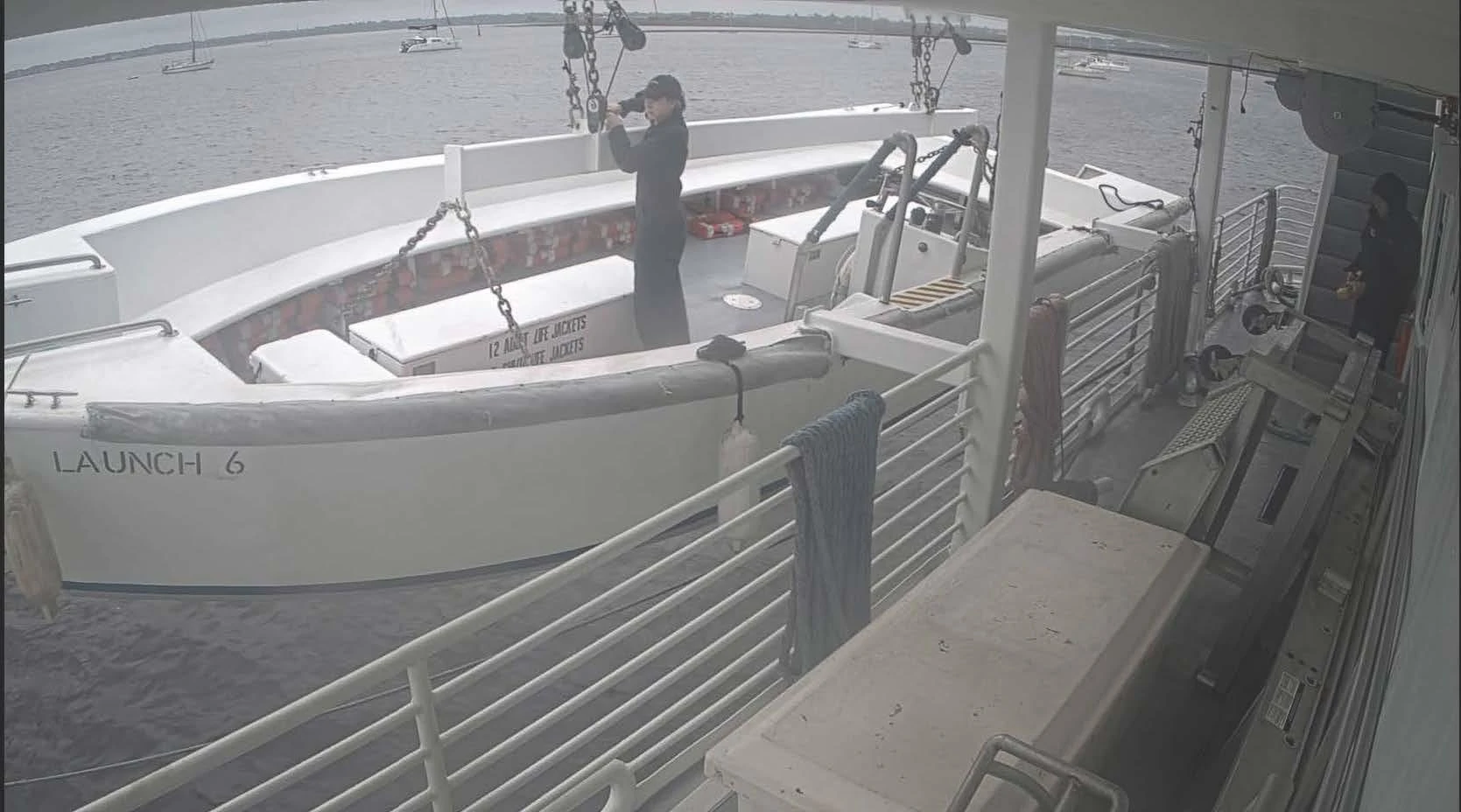
Read how Vuk Vujasinovic and VB Attorneys investigated a launch-boat collapse that seriously injured a cruise ship chief mate.
The matter settled to the satisfaction of all parties.
Every case is different. Prior results do not guarantee a similar outcome.
Which cruise line or company employed you?
The name painted on the ship may be a brand rather than the legal entity named in your employment agreement. The employer, vessel owner, operator, staffing company, and parent company may be different entities. Identifying them correctly matters.
Major brands serving U.S. cruise travelers include:
- Carnival Corporation brands: Carnival Cruise Line, Princess Cruises, Holland America Line, Seabourn, and Cunard. The wider group also includes AIDA Cruises, Costa Cruises, and P&O Cruises (UK).
- Royal Caribbean Group brands: Royal Caribbean International, Celebrity Cruises, and Silversea.
- Norwegian Cruise Line Holdings brands: Norwegian Cruise Line, Oceania Cruises, and Regent Seven Seas Cruises.
- Other ocean and expedition cruise brands: MSC Cruises, Explora Journeys, Disney Cruise Line, Virgin Voyages, Viking, Azamara, Crystal, The Ritz-Carlton Yacht Collection, National Geographic-Lindblad Expeditions, and UnCruise Adventures.
- U.S. small-ship and river cruising: American Cruise Lines.
These names help workers recognize their ship or employer. Inclusion does not allege wrongdoing, establish that we have represented a claimant against that company, or mean every employee has the same rights. Serving the U.S. market is not the same as being U.S.-owned or operating a U.S.-flagged vessel. If your cruise line is not listed, you can still ask us to review the situation.