Called out for all-hands work
The crew called for all hands while Mickey K. slept aboard an articulated tug-barge. He got up to help bring in the gangway and began climbing the ladder between the tug and barge.
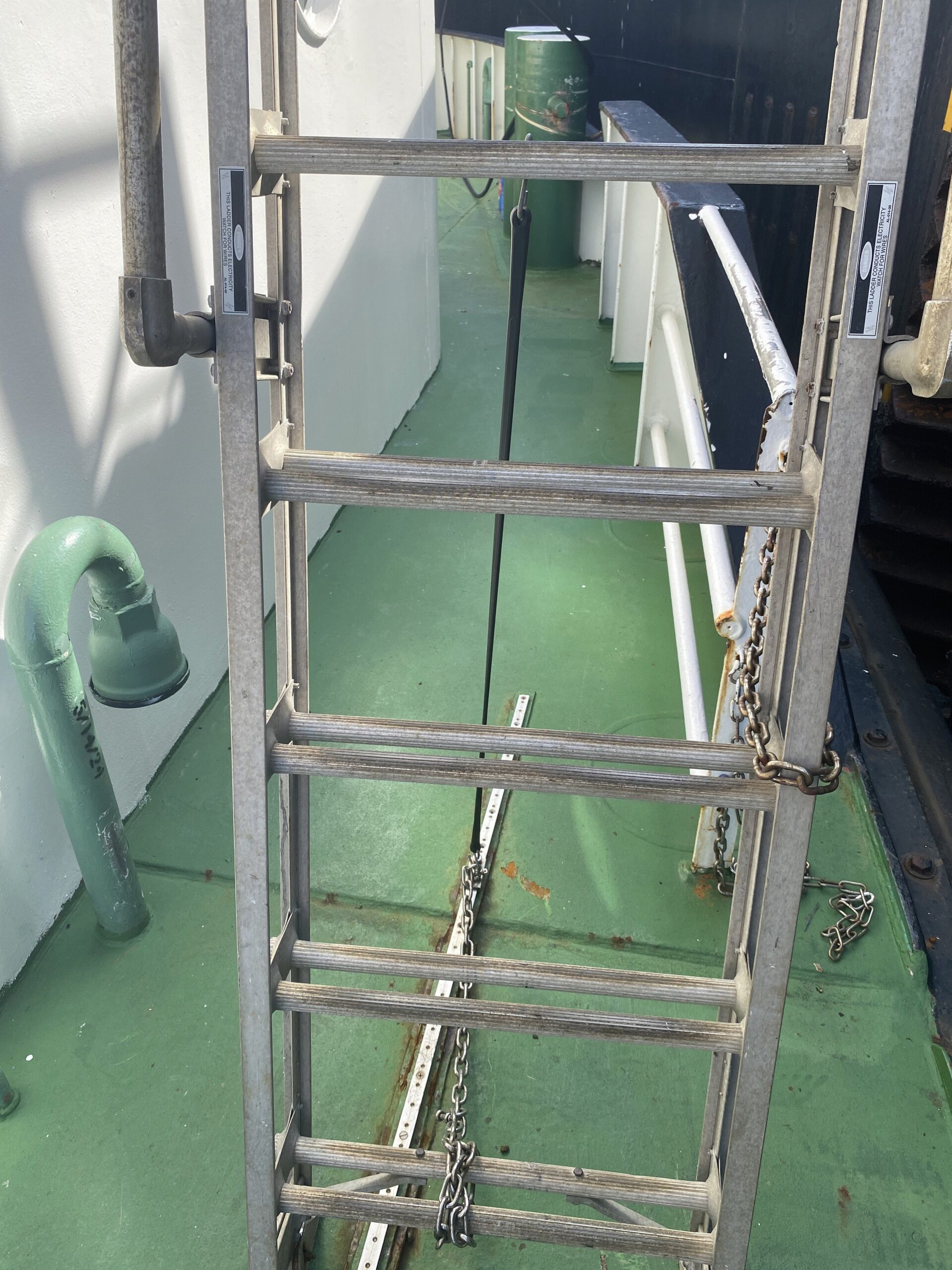
A chain and movable carriage connected the ladder’s base to a deck track. The design depended on a locking pin to hold that carriage in position. The seaman visually checked the ladder according to his training. As he neared the top, its base slid out and he fell to the deck below.
He fractured and dislocated his left shoulder, cut his legs and struck his head. He went to the emergency room that day.
Getting the report the company would not produce
The company initially withheld its incident investigation and root-cause materials. Brian and Brendan pursued those records through discovery and questioned the company’s corporate representative about how the company conducted the investigation.
Brendan developed testimony that the company had not anticipated litigation when it conducted the investigation and had not involved lawyers. He used that testimony to press for production. The company then agreed to produce the report.
It identified an incompletely seated locking pin and the absence of a stopper at the end of the track. Without a stopper, the carriage could travel completely off the track. The chain could remain attached while the ladder still lost its support.
The failure was in the access system
Brian and Brendan compared the report with the testimony and the company’s instructions for rigging the ladder. The instructions did not explain the locking pin, even though that component was critical to securing the ladder. The case record also described an earlier incident in which the ladder slipped when its pin did not lock in place; crew members caught it and prevented an injury.
The team examined alternative ways to secure vessel access. The company’s own report described another vessel using eyebolts instead of the sliding pin-and-carriage system.
Proving what the fall took from him
The seaman’s shoulder injury required two surgeries. His injuries also included a ruptured biceps tendon, spinal injuries and a traumatic brain injury. The medical case addressed headaches, memory problems and vision complaints, together with MRI findings of microhemorrhages.
Brian and Brendan developed the medical and vocational evidence needed to show how those injuries affected his ability to work. A vocational expert concluded that he could no longer earn his living as a seaman. The case involved the loss of his maritime career as well as the treatment he had already endured.
A confidential resolution before trial
Brian Beckcom and Brendan Fradkin prepared the case for trial. It resolved at mediation, weeks before the scheduled trial, through a confidential settlement.
Related help
Every case is different. Prior results depend on the facts of the individual case and do not guarantee a similar outcome.