The truck moved into a lane Efren already occupied
Brian Beckcom and lead attorney Brendan Fradkin represented Efren against the logging company and its driver. They developed the case through dashcam footage, scene evidence, medical records, and depositions of the driver and the company’s representative. The parties ultimately accepted a mediator’s proposal and settled the case.
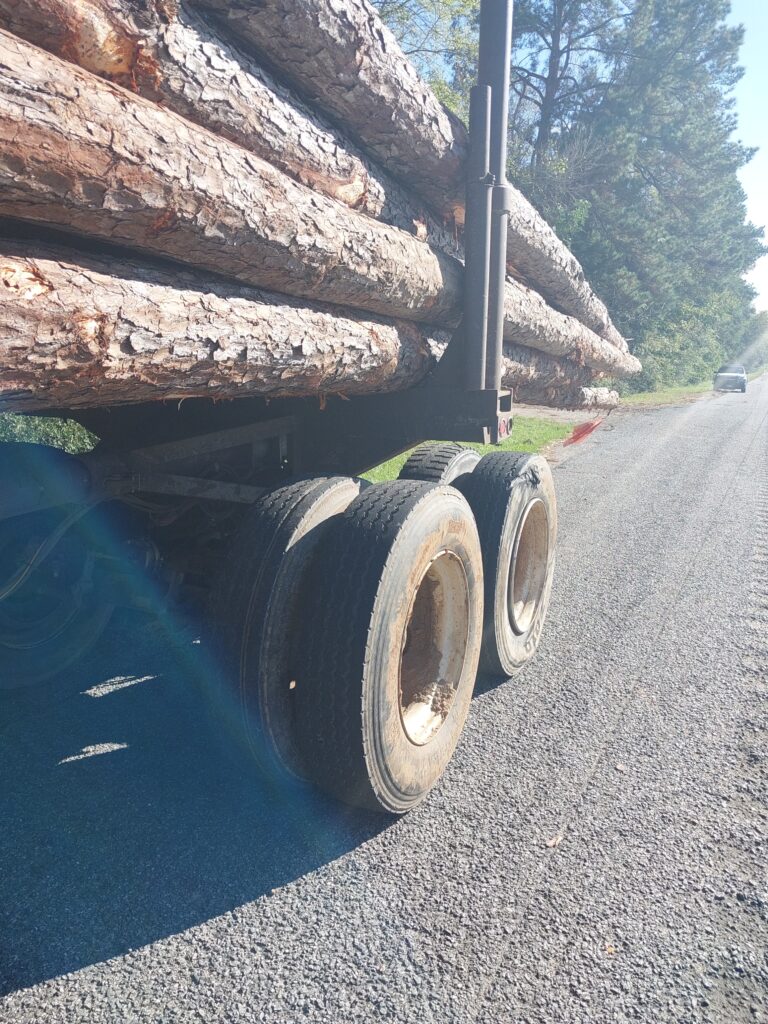
The logging truck was approaching a vehicle that was slowing down. Its driver had not left enough room to stop behind that vehicle. He moved left into the passing lane, where Efren was driving.
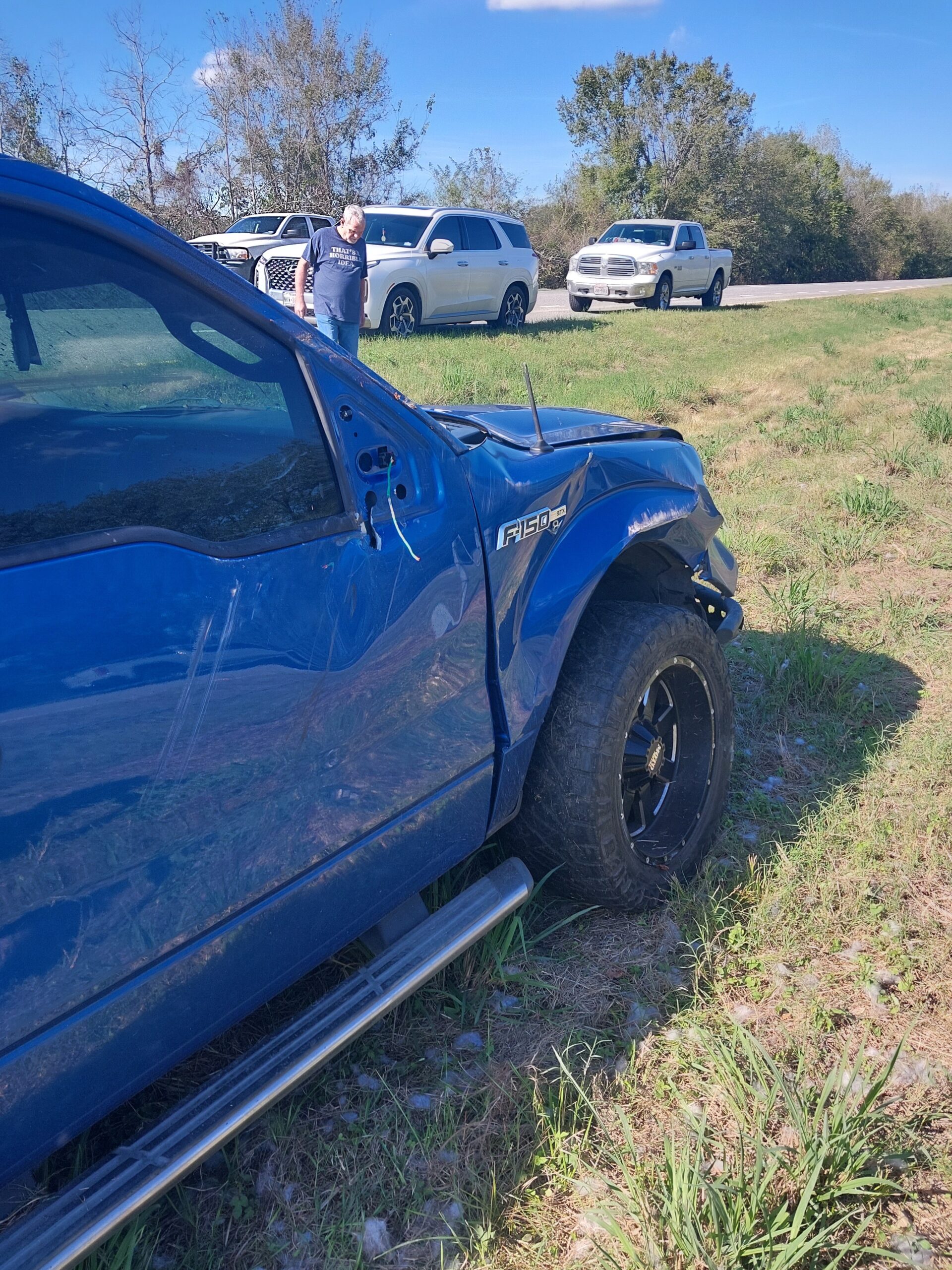
The impact pushed Efren’s pickup into the median. Damage to the pickup’s front-right corner, the vehicles’ resting positions, debris, and tire marks helped explain how the trailer crossed into his path.
The investigating officer identified faulty evasive action by the logging-truck driver. An independent witness described the truck entering the lane without signaling. Dashcam footage captured the lead vehicle slowing while the logging truck closed the distance. Together, those sources supported Efren’s account of a sudden lane change he had not caused.
Questioning the driver about the seconds before impact
Brian and Brendan examined the decisions that put the trailer in Efren’s lane. In deposition, the driver acknowledged that he waited until he was close to the slowing vehicle before moving left. He also acknowledged that a lower speed or a safer following distance could have prevented the collision.
That testimony went to the central issue: the truck driver’s response to traffic ahead. The dashcam footage and damage patterns supported the driver’s testimony about his late move into the passing lane.
Looking beyond the driver to the company’s practices
The investigation also examined how the logging company selected and prepared its drivers. Brian and Brendan questioned its corporate representative about road testing, written safe-driving testing, verification of the driver’s prior experience, and training on following distance and emergency lane changes.
The company’s testimony revealed gaps in those practices. The representative agreed that the unsafe lane change caused the crash, yet resisted accepting responsibility for it. The team also examined the company’s response after the collision and what it had done to prevent a similar crash.
By questioning both the driver and the company, Brian and Brendan developed evidence about the immediate driving decisions and the safety practices behind them.
Back surgery and a different working life
Efren’s lumbar MRI showed injuries at L4-5 and L5-S1. Conservative treatment and interventional care did not provide lasting relief. He underwent a percutaneous discectomy at both levels of his lower back.
Before the collision, Efren worked long night shifts making plywood. Afterward, he moved to lighter belt-measurement work at lower pay. His claim therefore involved more than the cost of treatment. Brian and Brendan also addressed the change in his ability to perform the work he had done before the crash.
Dancing was part of what he lost
Efren regularly danced at celebrations and community events. It was something he enjoyed, a part of his identity, and a source of additional income.
His back injury changed that. Activity that once filled his weekends became difficult to sustain. Learning how the injury affected his dancing helped Brian and Brendan explain a loss that medical bills alone could not capture.
The same attention to Efren’s daily life informed the broader damages claim: the treatment he required, the work he could perform, and the activities the injury had taken from him.
Preparing the case for resolution
VB Attorneys presented a policy-limits demand and renewed that demand after the depositions. The parties proceeded to mediation. After the session, both sides accepted the mediator’s proposal resolving Efren’s claims.
The settlement followed work on both sides of the case: establishing how the crash happened and showing what it had changed for Efren. Brian and Brendan combined independent crash evidence with testimony from the driver and company, then connected those findings to Efren’s surgery, work limitations, and everyday losses.
Practice experience
Meet the attorneys
Related case results
Questions about this case
Every case is different. Prior results depend on the facts of the individual case and do not guarantee a similar outcome.