A father killed during a refinery turnaround
Miguel Barron was working with his two brothers at ExxonMobil's Beaumont refinery when an industrial pipe broke loose and fell. He died from his injuries, leaving three daughters and his parents. His brothers had been working on the same crew. Their claims included the harm of witnessing his death.
The work was part of a refinery turnaround, with contractors removing a large heat exchanger from an elevated area of the plant. AltairStrickland, LLC employed the rigging crew. B&G Crane Service, LLC supplied the crane operation. Moving the exchanger required the crew to work around existing pipework while the crane supported the load.
The fatal injury was the starting point of the lawsuit. The disputed question was how responsibility for the lift, its hazards, and its supervision should be divided among the companies involved.
An obstruction in the lift path
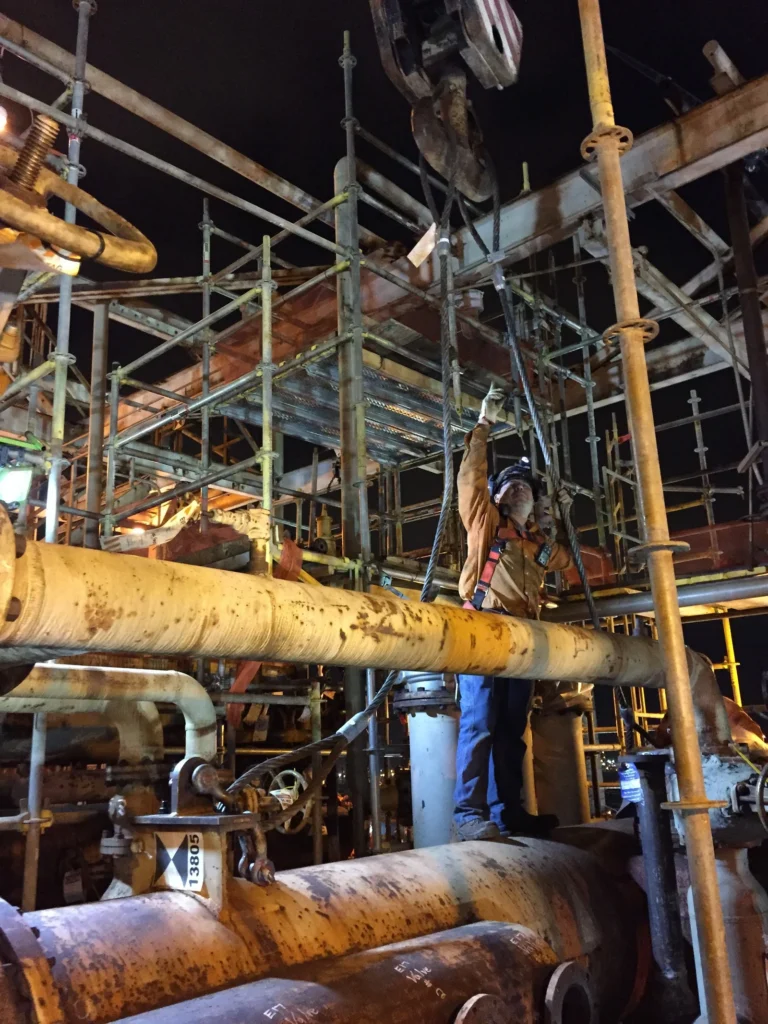
A separate Occupational Safety and Health Review Commission decision documents the work sequence. During a walkthrough before the lift, the rigging foreman identified a pipe that could obstruct the exchanger. A refinery representative said another crew would remove it. The pipe remained when the riggers were ready to begin.
The lift began after midnight. When an obstruction prevented the exchanger from moving upward, the signalman told the crane operator to stop. The crew then used a come-along, a hand-operated cable puller, to move the suspended exchanger sideways a few inches. The rigger took over operating that device from his brother.
The agency's account says a nearby pipe broke while Miguel was beginning to disconnect the come-along after the exchanger cleared the obstruction. The falling pipe struck foreman Hector Barron and then landed on Miguel. The sequence shows why the surrounding pipework and the method used to move the suspended equipment required close examination.
The crane company's written safety commitments
Vuk examined the responsibilities B&G had accepted before the job began. The crane company's safety plan called for identifying hazards, determining whether a lift required special precautions, and providing supervision for safe crane operations. Those written commitments gave the trial team a specific basis for examining how this lift had been prepared and carried out.
Vuk Vujasinovic served as lead counsel. Vuk presented the family's case through a trial lasting approximately two weeks. The published trial account identifies the safety plan, crane-operator training, and the absence of a B&G supervisor at the lift as central subjects.
The family's position was that B&G had failed to carry out its own safety commitments. The trial required more than showing that a worker had died near a crane. It required connecting the crane company's responsibilities to the hazards present during this particular operation.
B&G disputed responsibility for the death
B&G denied responsibility and pointed to the roles of the refinery operator and rigging contractor. It argued that the pipe's condition, its removal, enforcement of safety procedures, and the qualifications of the rigging crew were responsibilities of others.
The competing accounts put the division of work directly before the jury. One company operated the refinery, another supplied the rigging crew, and B&G supplied the crane operation. The family's case asked the jury to examine B&G's own duties within that arrangement, including the safety planning and supervision it had promised.
The jury did not assign all responsibility to one company. Its allocation reflected findings concerning each company's role in the fatal operation.
The $44,370,000 Verdict
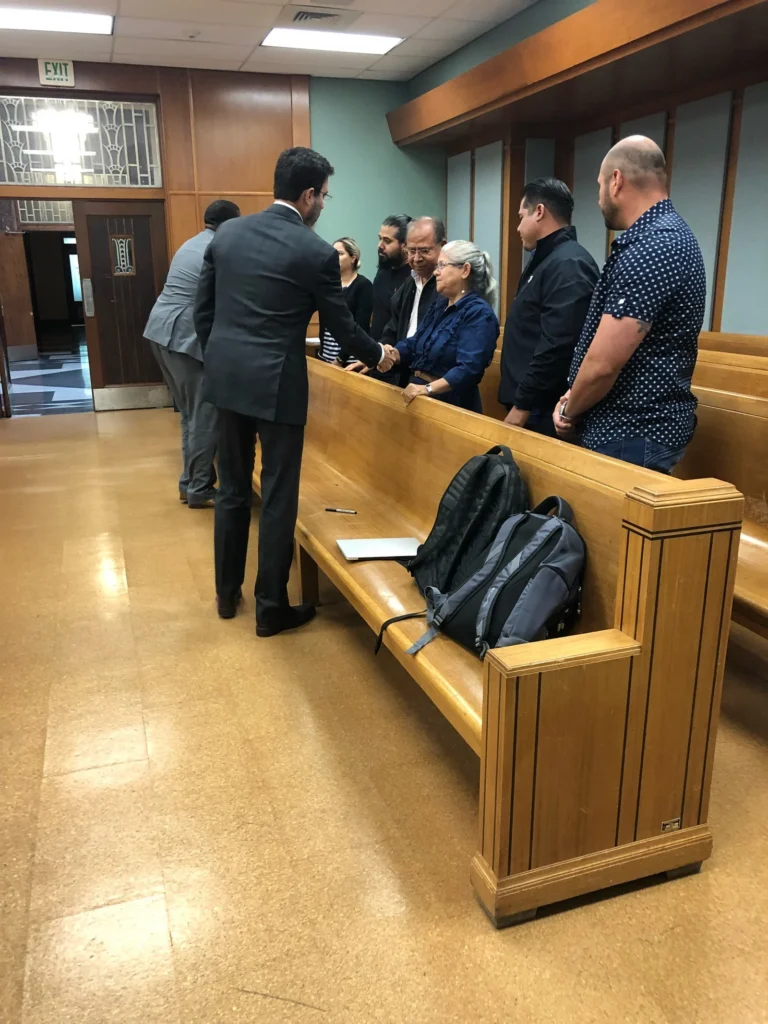
After deliberating over three days, the Jefferson County jury returned a total damages Verdict of $44,370,000 on September 13, 2018. It assigned 45 percent responsibility to B&G, 45 percent to ExxonMobil, and 10 percent to AltairStrickland. The trial was against B&G, the remaining trial defendant.
The published case account records a highest offer before the Verdict of $500,000. The jury's total damages finding and its allocation of responsibility are separate parts of the result.
What happened after the Verdict
The litigation continued after trial. A June 9, 2022 opinion from the Ninth Court of Appeals records that, following the jury Verdict and further proceedings, B&G settled the matter. The trial court approved the Settlement for the remaining minor claimant on April 6, 2020.
That later opinion concerned a court-appointed representative's fee. It recorded the Settlement without stating the amount paid. The $44,370,000 figure is the jury's trial assessment, followed by a separate negotiated resolution.
The family's trial case examined the companies' separate roles, B&G's written safety commitments, and the planning and supervision of the lift. It gave the jury a specific basis for evaluating the crane company's responsibility within a job involving several contractors.
What the evidence showed
- A pipe obstructed the planned removal of a heat exchanger at ExxonMobil's Beaumont refinery.
- The work involved an AltairStrickland rigging crew and a B&G crane operator, with different responsibilities disputed at trial.
- B&G's written safety commitments, operator training, and supervision were central to Vuk's trial presentation.
- The jury assigned responsibility of 45 percent to B&G, 45 percent to ExxonMobil, and 10 percent to AltairStrickland.
- The $44,370,000 Verdict was followed by further proceedings and a Settlement.
The offer and the jury Verdict
The jury divided responsibility among three companies. The case later settled. These figures do not state the amount ultimately paid.
More from the record
Frequently Asked Questions
Every case is different. Prior results depend on the facts of the individual case and do not guarantee a similar outcome.