Board certification gives you a way to check a personal injury lawyer’s experience beyond advertising. A lawyer must document work in the field, satisfy trial-experience requirements, undergo professional review, complete specialty education, and pass a written examination. The credential belongs to the lawyer who earns it, not to the law firm. Texas Board of Legal Specialization standards
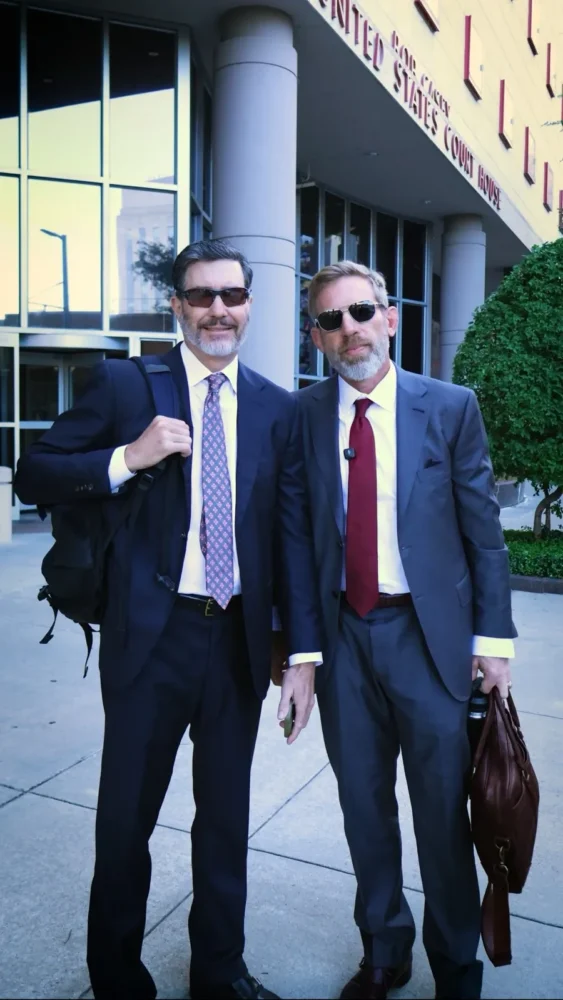
Brian Beckcom and Vuk Vujasinovic are both Board Certified in Personal Injury Trial Law by the Texas Board of Legal Specialization. Brian was first certified in 2006. Vuk was first certified in 2004. Both are listed in the board’s current directory. Brian’s official certification record · Vuk’s official certification record
For someone choosing a lawyer after an injury or a death in the family, that independent review is useful. It establishes qualifications you can verify while you ask the questions that matter to your case: Who will handle the work? What similar cases has that lawyer handled? How will the lawyer investigate what happened and explain your options?
What the certification covers
The Texas Board of Legal Specialization, usually called TBLS, administers the certification program. The Supreme Court of Texas established TBLS in 1974. Personal Injury Trial Law is a specific specialty addressing litigation over physical or mental injury, including injury claims involving vehicles, defective products, professional malpractice, and other negligent or intentional conduct. About TBLS · Personal Injury Trial Law standards
The specialty matters. Certification in another field of law is a different credential. When you check a lawyer’s record, look for the lawyer’s name, the specialty, and the certification year. You can then discuss how that lawyer’s actual work relates to your situation.
Applicants pay program fees, but paying a fee does not satisfy the experience, reference, education, or examination requirements. Approval depends on meeting the board’s standards. TBLS general requirements
How a lawyer earns it
The process requires an application supported by experience, professional references, and education. The current standards include the following requirements.
An established practice in the field
An applicant must have at least five years of full-time law practice and be an active State Bar of Texas member in good standing. For this specialty, at least 25% of the applicant’s practice time must have involved Texas personal injury trial law in each of the three years before applying. General requirements, Part I, Section II · Specialty requirements, Part II, Section VI.B
Years with a law license alone do not satisfy the specialty requirements. TBLS examines the work the applicant has actually done.
Documented courtroom experience
The ordinary trial-experience requirements call for at least 10 contested civil cases handled as lead counsel and submitted to the judge or jury for decision in a Texas court of record. At least five must be personal injury jury trials. The submitted cases must account for at least 20 separate trial days, including at least 10 days in personal injury jury trials. Personal Injury Trial Law standards, Section VI.B.1.b
These are substantive responsibilities. For a jury case, the standards define lead counsel through participation that includes jury selection, an opening statement or closing argument, and significant questioning of live witnesses. Pretrial proceedings, including summary-judgment proceedings, do not count as trials under this definition. TBLS also has limited authority to consider equivalent judicial or unusual experience. Specialty definitions · General requirements, Section VI.C
Review by lawyers and a judge
An applicant supplies at least five references familiar with the applicant’s personal injury trial work: four Texas attorneys substantially involved in the field and one Texas judge before whom the applicant has appeared in a personal injury matter. At least one attorney reference must have handled a personal injury trial with or against the applicant. References cannot be the applicant’s partners or associates, and their responses go confidentially to TBLS. Specialty reference requirements · General reference requirements
Specialty education and an examination
Initial certification requires 60 hours of qualifying specialty continuing legal education within the applicable three-year period. Applicants must also pass the specialty examination. General requirements, Sections V and VII
The currently posted exam specifications describe two three-hour sessions: three essay questions in the morning and 100 multiple-choice questions in the afternoon, including professional ethics. The subjects reach beyond knowing legal rules. They include investigating facts, evaluating a case, developing a strategy, examining witnesses, handling evidence, and explaining an answer persuasively. TBLS Personal Injury Trial Law exam specifications
This is a summary, not a substitute for the complete standards. TBLS decides whether an applicant qualifies, and its requirements can change.
How uncommon is it?
Personal Injury Trial Law certification is uncommon. The State Bar of Texas tracks it separately from certification in other legal specialties in its attorney statistical profile. State Bar of Texas statistical profile, page 4
The rarity of a particular certification describes how many lawyers hold that credential. It does not rank lawyers by results or establish how any individual case will turn out.
The requirements help explain why the credential is uncommon. A lawyer needs a practice that produces the required experience, including responsibility for qualifying trials. Applying also takes documentation, professional references, specialty study, and an examination. Maintaining certification requires further work.
Why doesn’t every lawyer pursue it?
Board certification is voluntary. Texas does not require it before a lawyer practices in a particular area. TBLS general requirements, Section I
A lawyer’s practice may focus on a different field, may not yet include the required trial experience, or may not fit this specialty’s requirements. A lawyer who could qualify may choose not to undertake the application, examination, and ongoing requirements. These are possible explanations, not findings about why any particular lawyer has not applied. The certification statistics do not answer that question.
Absence of certification does not, by itself, establish that a lawyer lacks ability or is the wrong person for a case. Certification gives you an additional, independently reviewed qualification to consider alongside the lawyer’s experience, communication, and proposed approach to your case.
Keeping the credential requires continued work
Certification lasts five years. Recertification ordinarily requires 100 hours of specialty continuing legal education during that period, qualifying references, and continued substantial involvement. In Personal Injury Trial Law, the practice-time requirement remains at least 25% in each year of the five-year certification period, subject to the standards’ exceptions. General recertification requirements · Personal Injury Trial Law recertification requirements
The initial trial requirements and later recertification requirements are different. The standards do not say that every certified lawyer must complete another five personal injury jury trials in every renewal period.
Brian’s and Vuk’s certification histories
Brian Beckcom: first certified in 2006
The TBLS directory identifies 2006 as Brian’s certification year in Personal Injury Trial Law. His work at VB Attorneys includes personal injury and wrongful death cases involving maritime work, commercial vehicles, and industrial incidents. His biography explains his background and links to examples of his work. Verify Brian’s certification · Read Brian Beckcom’s biography
Vuk Vujasinovic: first certified in 2004
The TBLS directory identifies 2004 as Vuk’s certification year in Personal Injury Trial Law. His practice includes injury and wrongful death cases involving industrial work, commercial vehicles, and vessels. His biography provides his background and examples of the cases he has handled. Verify Vuk’s certification · Read Vuk Vujasinovic’s biography
Those dates refer specifically to board certification, separate from when Brian and Vuk first became licensed to practice law.
What to ask before hiring a lawyer
Use the credential as the beginning of a conversation. Ask who will be responsible for your case and whether you can speak with that lawyer directly. Ask about matters with similar facts and legal issues, what the lawyer personally did in them, and how those experiences relate to your situation.
You should also understand the plan for investigating the incident, obtaining records, addressing disputed evidence, and evaluating a possible Settlement. Ask how fees and expenses work and how important decisions will be discussed with you.
No credential can establish what your case is worth or guarantee its outcome. Those questions depend on the facts, the evidence, the applicable law, and the decisions made as the case develops.
Questions about board certification
Are Brian Beckcom and Vuk Vujasinovic board certified?
Yes. Brian Beckcom and Vuk Vujasinovic are both Board Certified in Personal Injury Trial Law by the Texas Board of Legal Specialization. TBLS lists Brian’s first certification year as 2006 and Vuk’s as 2004. Both appear in its current directory.
Is a lawyer required to be board certified to handle an injury case?
No. The TBLS standards make certification voluntary. A lawyer may practice in an area without being board certified in it. Certification is an additional qualification to consider when choosing counsel.
Does board certification guarantee a better result?
No. Certification verifies that a lawyer has met the board’s requirements in a specialty. It does not guarantee a particular result, establish the value of a case, or replace an examination of the lawyer’s relevant experience.
Does the certification last forever?
No. Certification lasts five years. Continuing certification requires satisfying the applicable recertification standards, including continued involvement, professional references, and specialty continuing legal education.
How can I verify a lawyer’s certification?
Use the Texas Board of Legal Specialization’s public Find a Board Certified Lawyer directory. Search by the lawyer’s name and check the specialty and certification year. You can also follow the direct links to Brian’s and Vuk’s official records on this page.